
 11
11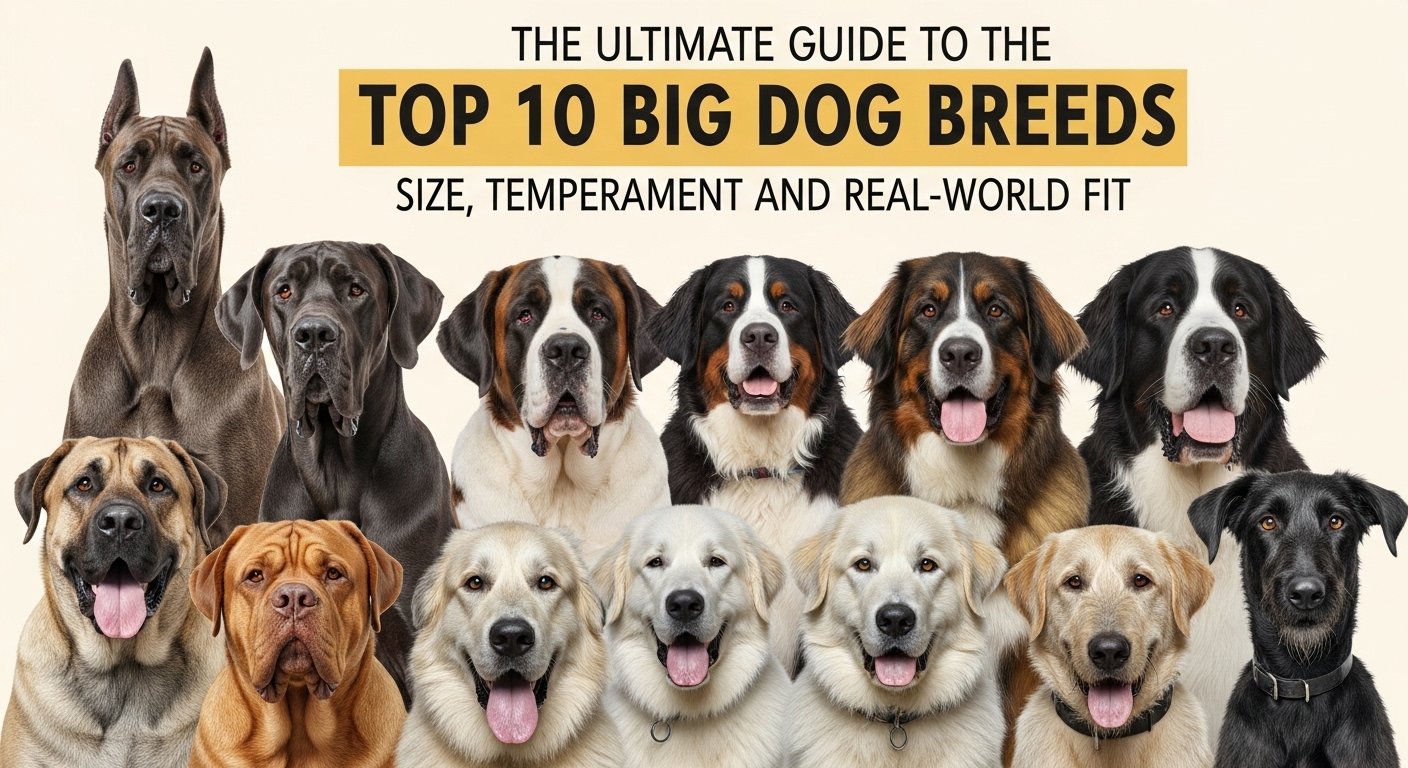
Big dogs capture our imagination like no other pets. Their sheer presence fills a room, their loyalty runs deep, and the commitment they demand is anything but small. Whether you’re looking for a gentle giant to raise alongside kids or a protective working breed with a serious job to do, picking from the top 10 big dog breeds means looking beyond the cute puppy paws. This guide ranks the largest and most impressive breeds based on real-world temperament, exercise demands, health considerations, and living space requirements. No fluff, just straight talk from someone who has lived with and trained these gentle giants for over a decade.
Standing up to 32 inches at the shoulder and often tipping the scales over 150 pounds, the Great Dane holds a legendary status among the top 10 big dog breeds. What surprises most new owners is how little dog you actually get in terms of energy. Danes are famously low-energy indoors, content to sprawl across your largest sofa for hours. Their nickname “the gentle giant” fits perfectly—these dogs often show more caution around toddlers than many small breeds. A longtime Dane owner once told me, “My 170-pound boy hides behind me when the vacuum turns on.” That said, their lifespan sits painfully short at 7 to 10 years, and you absolutely need to budget for bloat prevention surgery (gastropexy) and joint supplements. Best for quiet households that don’t mind a lap dog the size of a small pony. Weaknesses include drool (lots of it) and a stubborn streak during teenage months.
Few dogs match the sheer mass of the English Mastiff, with males regularly hitting 200 pounds and some exceptional individuals crossing 250. Within the top 10 big dog breeds, the Mastiff holds the heavyweight title for calmest disposition. These dogs were bred to guard estates without barking or chasing—they simply lean on intruders. Modern Mastiffs retain that stillness. A full day’s exercise might mean two short walks and ten minutes of tug-of-war. What you trade for that low energy is a mountain of drool, epic shedding, and a food bill that rivals a human teenager’s. Hip dysplasia and heart problems run in the breed, so only buy from breeders who perform OFA certifications. This breed shines for experienced owners with fenced yards who want a quiet home protector that won’t bounce off the walls.
Famous for barrel-around-the-neck images, the Saint Bernard brings more drool and charm than any other entry on the top 10 big dog breeds list. These dogs average 140 to 180 pounds and carry a thick double coat that sheds year-round. What sets Saints apart is their goofy, affectionate nature. They genuinely believe they are lap dogs. One rescue volunteer shared, “My Saint Bernard tries to sit on guests’ laps. All 165 pounds of him.” Originally bred for avalanche rescue, modern Saints need moderate exercise—a daily mile walk suffices—but they cannot tolerate heat. Summer months mean early morning walks and constant access to air conditioning. Health watch includes elbow dysplasia, bloat, and entropion (eyelids rolling inward). Best for cold-climate families with young children who want a patient, clownish companion that will drool on every guest.
If you want a big dog that naturally babysits children and pulls a drowning adult from a lake, the Newfoundland is your breed. Males range from 130 to 150 pounds with webbed feet and a water-resistant double coat. Among the top 10 big dog breeds, Newfoundlands rank highest for sweet temperament and natural swimming ability. Their “Newfie shuffle” walk and soft mouth make them incredibly safe around toddlers. However, that glorious coat demands brushing three times a week and professional grooming every two months. Drool happens, especially after drinking water. The biggest downside is a short lifespan of 8 to 10 years plus high rates of subvalvular aortic stenosis (a heart condition). These dogs need space to cool off and access to water for true happiness. Best for active families near lakes or pools who don’t mind slobber and constant vacuuming.
Standing as the tallest of all the top 10 big dog breeds, the Irish Wolfhound reaches up to 35 inches at the shoulder yet weighs only 120 pounds on average. That lean build comes from their sighthound heritage—they were bred to chase wolves and elk across Irish countryside. Modern Wolfhounds carry a calm, almost melancholic dignity. They sprint in bursts then sleep for hours. One owner described them as “55-mile-per-hour couch potatoes.” The brutal reality is a lifespan of only 6 to 8 years, with bone cancer and heart disease cutting most lives short prematurely. They require a soft place to sleep (hard floors cause calluses) and cannot be left alone for long without developing separation anxiety. Best for patient owners who understand they are adopting a brief, beautiful chapter. Not for first-time big dog owners due to their size and health fragility.
Bernese Mountain Dogs combine striking looks with a genuine desire to work. At 80 to 115 pounds, they are among the more manageable of the top 10 big dog breeds in terms of sheer mass, but they pack immense pulling power and endurance. Originally Swiss farm dogs used for drafting carts and driving cattle, Berners thrive when given a job. That job can be as simple as pulling a cart with kids or carrying a doggy backpack on hikes. Their biggest red flag is cancer—over 50% of Berners die from various cancers, typically around 6 to 8 years old. They also shed heavily twice a year when they “blow” their undercoat. The temperament is sweet, loyal, and slightly stubborn. They need at least 45 minutes of purposeful activity daily. Best for rural or suburban owners who want a family dog that can also help with light farm chores or serious hiking.
Unlike most dogs on the top 10 big dog breeds list, the Anatolian Shepherd was never bred to please humans. These 110- to 150-pound Turkish livestock guardians think for themselves. They patrol property lines, sleep during the day, and work through the night watching for predators. For a suburban family, this independence becomes a headache—Anatolians dig, climb fences, and ignore commands if they disagree. But for rural homeowners with acreage and livestock, no dog offers better predator protection. They rarely bark without cause, shed moderately, and stay incredibly healthy compared to other giant breeds, often living 11 to 13 years. A rancher in Montana told me, “My Anatolian killed a coyote at midnight then ate breakfast with my kids like nothing happened.” Best for experienced owners with at least five fenced acres. Not for apartment living or first-time big dog homes.
Rottweilers land on the top 10 big dog breeds list for their blend of power, trainability, and deep loyalty. Males typically run 95 to 135 pounds of solid muscle. The breed’s reputation for aggression comes from poor breeding and zero socialization. A well-bred, properly trained Rottweiler is calm, confident, and exceptionally gentle with children. One behaviorist explained, “A Rottweiler will let a toddler climb on him, but he will also hold a stranger at the door without biting.” Their weaknesses include strong guarding instincts that require early socialization, plus high rates of hip dysplasia and cruciate ligament tears. They need at least an hour of structured exercise daily plus mental work like obedience training. Best for active owners who commit to lifelong training and have a securely fenced yard. Not for people who want a dog park social butterfly.
Originally bred to resemble a lion, the Leonberger is a 120- to 170-pound bundle of fluffy gentleness. Among the top 10 big dog breeds, Leonbergers stand out for their water-loving nature and therapy dog aptitude. They were created by crossing Newfoundlands, Saint Bernards, and Pyrenees, producing a dog with the calm of all three. Leonbergers excel at cart pulling, water rescue trials, and nursing home visits. Their double coat requires serious brushing every other day to prevent mats. Health issues include hip dysplasia and a specific cancer called osteosarcoma, though they live 8 to 9 years on average. They are not heavy droolers compared to Saints or Newfoundlands, but they shed in clumps. Best for families who want an all-around giant that can swim, pull, cuddle, and do therapy work. Expect to pay a premium from reputable breeders.
Where the Fight Finds Its Footing: A Hard Look at the Top 10 Hospitals for Cancer in California
The Caucasian Shepherd rounds out the top 10 big dog breeds as the most challenging and dangerous option for inexperienced owners. These dogs reach 120 to 200 pounds and were bred to protect flocks from wolves and bears in the Caucasus Mountains. Their default response to a stranger is aggressive suspicion. Even well-socialized Caucasians often cannot be trusted around unfamiliar adults. This is not a family pet; it is a working tool for livestock protection in remote areas. One breeder warned, “If you want a dog for your suburban block party, buy a Golden Retriever. The Caucasian Shepherd will end that party.” They have relatively few health issues and live 10 to 12 years, but they need miles of daily patrol space and zero tolerance for fence climbing. Best only for experienced ranchers with large, remote acreage and genuine predator threats. Never for homes with frequent visitors or small children.
| Breed | Average Weight | Lifespan | Daily Exercise | Drool Level | Best For |
|---|---|---|---|---|---|
| Great Dane | 140-175 lbs | 7-10 yrs | Low (30 min walk) | High | Quiet apartment dwellers |
| English Mastiff | 160-230 lbs | 6-10 yrs | Low (20-30 min) | Extreme | Homebodies with space |
| Saint Bernard | 140-180 lbs | 8-10 yrs | Moderate (45 min) | High | Cold-climate families |
| Newfoundland | 130-150 lbs | 8-10 yrs | Moderate (45 min) | High | Water-loving families |
| Irish Wolfhound | 105-120 lbs | 6-8 yrs | Moderate (sprint + sleep) | Low | Patient, experienced owners |
| Bernese Mountain Dog | 80-115 lbs | 6-8 yrs | Moderate (45 min work) | Medium | Active rural families |
| Anatolian Shepherd | 110-150 lbs | 11-13 yrs | Low-moderate (patrol) | Low | Ranchers with acreage |
| Rottweiler | 95-135 lbs | 8-10 yrs | High (1+ hour) | Medium | Committed active owners |
| Leonberger | 120-170 lbs | 8-9 yrs | Moderate (45 min) | Low-medium | Therapy/water families |
| Caucasian Shepherd | 120-200 lbs | 10-12 yrs | High (patrolling) | Medium | Remote predator control |
The top 10 big dog breeds each bring unique strengths and serious trade-offs. The Great Dane gives you low-energy apartment living in exchange for a short lifespan. The Newfoundland offers water rescue and child-safety but demands grooming and drool management. The Anatolian Shepherd and Caucasian Shepherd are not family pets—they are working tools for specific rural needs. Before bringing home any giant breed, honestly assess your space, budget (food, vet, grooming easily hits $200+ monthly), and daily schedule. A tired big dog is a happy big dog, and an untrained 150-pound dog is a liability. Visit breeders, meet adult dogs of the breed you want, and talk to owners who have lived with them for years. The right match among the top 10 big dog breeds will give you a decade of loyal companionship. The wrong match creates chaos and heartbreak.
The Great Dane and English Mastiff are the most forgiving for first-time owners among the top 10 big dog breeds. Both have low exercise needs and naturally calm temperaments. However, first-timers must commit to puppy socialization classes and understand the high veterinary costs associated with giant breeds. Avoid Anatolian Shepherds, Caucasian Shepherds, and Irish Wolfhounds as first dogs.
The Anatolian Shepherd consistently shows the fewest genetic health problems and longest lifespan within the top 10 big dog breeds, often living 11 to 13 years. Mixed-breed giant dogs also tend to be healthier. The breeds with the most health issues are Bernese Mountain Dogs (high cancer rates) and Irish Wolfhounds (heart disease and bone cancer).
Yes, but only specific breeds. The Great Dane adapts best to apartment living due to its low indoor energy. English Mastiffs also do well in larger apartments if they get two daily walks. Avoid high-energy breeds like Rottweilers or working guardians like Anatolian Shepherds in apartments. No apartment should be studio-sized—at minimum, the dog needs room to turn around and lie down fully stretched.
Feeding a giant breed costs between $100 and $250 per month depending on the dog’s size and food quality. A 150-pound English Mastiff eating premium large-breed kibble goes through about 30 to 40 pounds of food monthly. You also need joint supplements like glucosamine, which add another $20 to $40 monthly. Budget for elevated feeders to reduce bloat risk.
The Newfoundland, Saint Bernard, and Great Dane are historically the safest around children. Newfoundlands have a natural “babysitting” instinct and a soft mouth. Saint Bernards are famously patient with rough toddler play. Great Danes are cautious and gentle despite their size. Always supervise any big dog around young kids, regardless of breed reputation. The most dangerous around children are under-socialized Caucasian Shepherds and any giant breed that has not been trained to handle sudden movements and loud noises.