
 11
11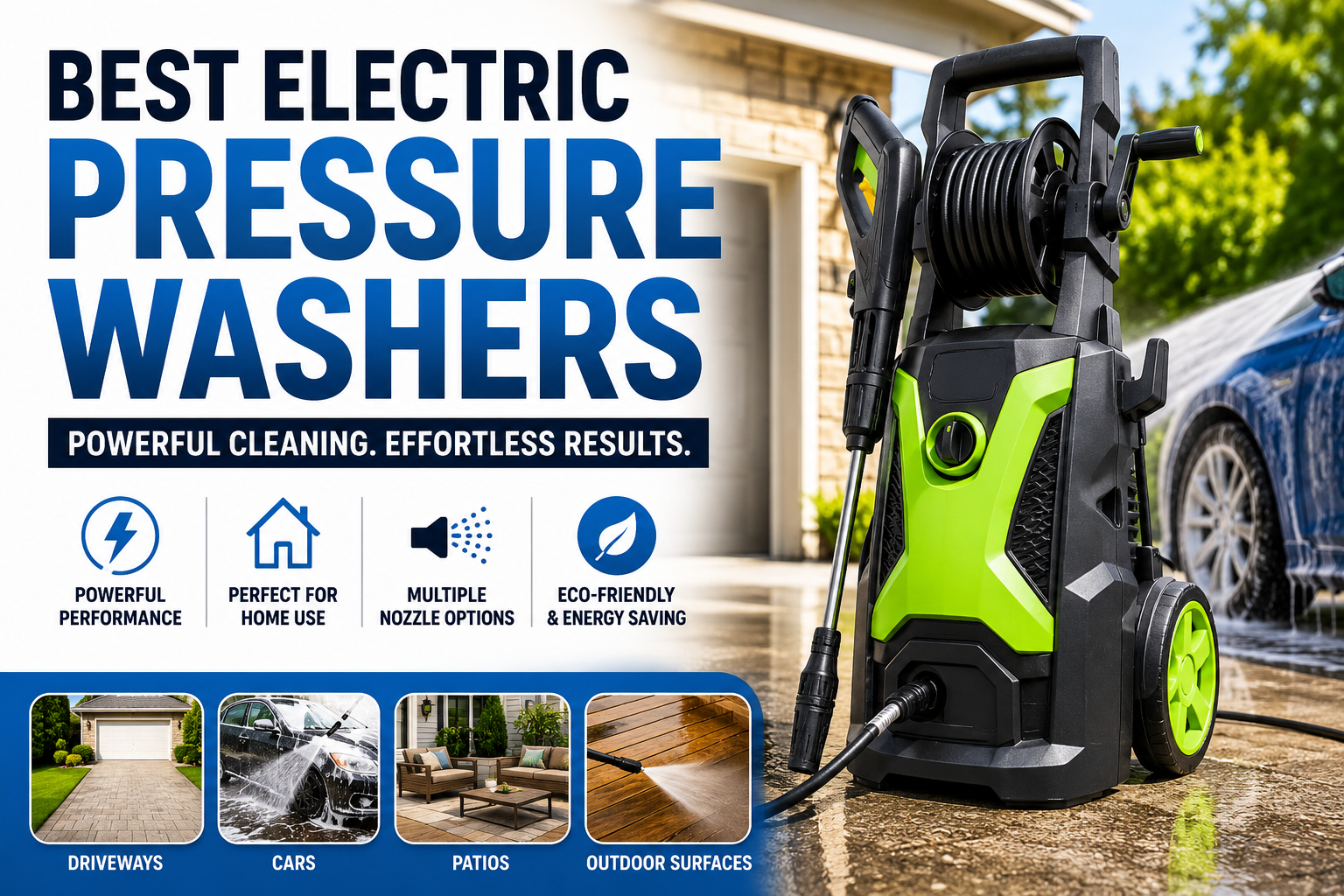
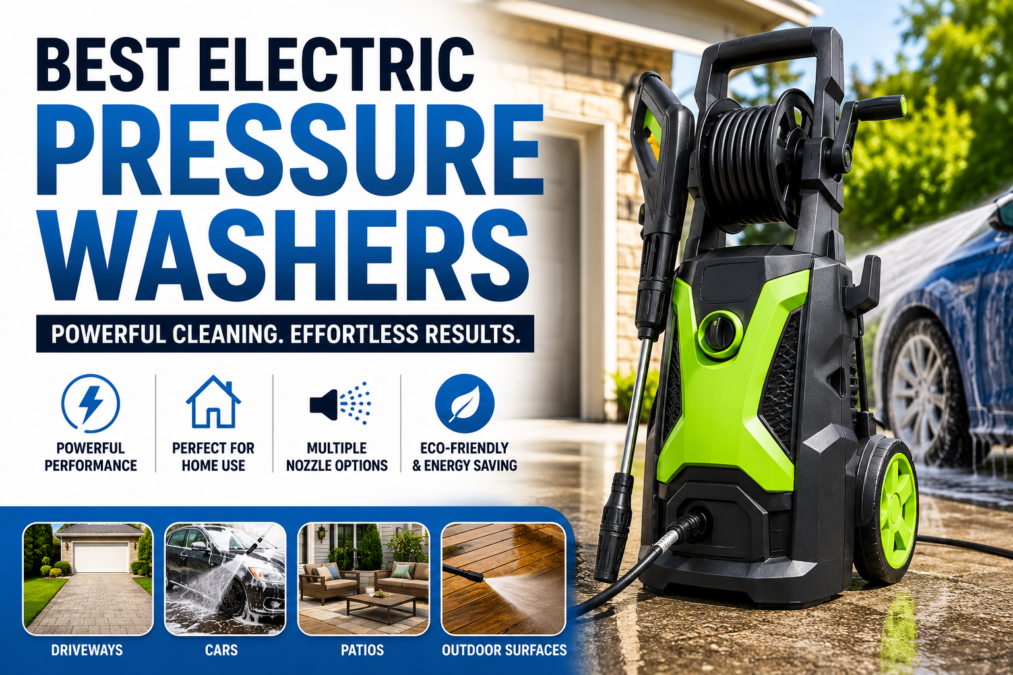
Finding the best electric pressure washer is no longer as simple as picking the model with the highest PSI rating. Modern electric pressure washers have become significantly more capable, with some delivering cleaning performance that rivals entry-level gas machines while remaining quieter, easier to maintain, and far more convenient for homeowners. Independent testing organizations have consistently found that many electric models now provide excellent cleaning results for common residential tasks.
The challenge is separating marketing claims from real-world performance. Manufacturers often emphasize peak PSI numbers, but cleaning efficiency depends on a combination of pressure, water flow rate, motor quality, hose construction, durability, portability, and ease of use.
For this roundup, the evaluation focused on cleaning power, reliability, maneuverability, value, accessory quality, homeowner satisfaction, versatility, and long-term usability. The goal was to identify the best electric pressure washer options for different types of users rather than forcing every homeowner into the same recommendation.
| Model | Approx. PSI | Best For | Strengths | Potential Drawbacks |
|---|---|---|---|---|
| Greenworks GPW3000 | 3000 | Heavy residential cleaning | Strong power, brushless motor | Heavier than competitors |
| Sun Joe SPX3000 | 2030 | General household use | Excellent value, versatile | Less powerful on stubborn stains |
| Westinghouse ePX3500 | 2500+ | Compact storage | Stable design, portability | Moderate cleaning speed |
| Ryobi RY142022 | 2000 | Home maintenance | Reliable, user-friendly | Not ideal for neglected concrete |
| DeWalt 2400 PSI | 2400 | Frequent users | Durable construction | Higher price |
| Kärcher K4 Power Control | 1900+ | Delicate surfaces | Precision control | Lower raw power |
| Greenworks Pro 2700 | 2700 | Driveways and patios | Excellent balance of PSI and GPM | Bulkier frame |
| Craftsman Electric Pressure Washer | 1900–2100 | Homeowners seeking simplicity | Easy operation | Limited heavy-duty capability |
| EGO Power+ HPW3200 | 3200 | Cordless flexibility | Battery convenience | Premium cost |
| Westinghouse ePX3100 | 2100+ | Cars and outdoor furniture | Compact and maneuverable | Not intended for demanding concrete work |
Among current contenders for the best electric pressure washer, the Greenworks GPW3000 consistently stands near the top. Independent testing and user feedback frequently highlight its ability to handle demanding residential cleaning tasks that often challenge electric units.
The combination of high pressure, strong water flow, and a brushless motor gives it the authority needed for driveways, retaining walls, fencing, brick patios, and heavily weathered concrete. Many homeowners report that cleaning sessions take noticeably less time compared with lower-powered electric models because the machine maintains pressure effectively throughout the job.
Its biggest advantage is efficiency. A contractor once described powerful electric units like this as “the closest thing to gas performance without the gas headaches.” That description fits well. The tradeoff is weight and size. Storage requires more space, and moving it around a large property demands slightly more effort than compact alternatives.
The Sun Joe SPX3000 has remained popular for years because it delivers reliable performance at a price point accessible to most homeowners. It is frequently recommended by testing organizations and home improvement experts for routine maintenance tasks.
For washing decks, patio furniture, fences, outdoor equipment, and vehicles, the machine performs remarkably well. The dual detergent tank system adds convenience for users who regularly switch between cleaning solutions. Setup is straightforward, making it attractive for first-time pressure washer owners.
The limitation appears when tackling deeply embedded grime on concrete surfaces. While capable, it simply requires more passes than higher-end units. A homeowner reviewing the machine summarized it well: “It handles ninety percent of household cleaning jobs without making you pay for power you’ll rarely use.”
Storage space matters more than many buyers realize. Large pressure washers often become frustrating when garage space is limited. The Westinghouse ePX3500 addresses this challenge through an unusually compact design while maintaining respectable cleaning performance.
Its low-profile frame improves stability and reduces the likelihood of tipping during operation. That practical advantage becomes apparent when moving around vehicles, patio furniture, and landscaping features.
The machine shines for homeowners focused on car washing, siding maintenance, and seasonal property cleanup. It handles moderate driveway cleaning adequately, though heavily stained concrete may require more time than premium high-output units. For convenience-focused buyers, it remains one of the strongest candidates for the best electric pressure washer category.
Ryobi has built a reputation for producing homeowner-friendly tools, and the RY142022 follows that philosophy closely. It emphasizes consistency, ease of operation, and reliability rather than chasing the biggest numbers on a specification sheet.
The machine performs particularly well for seasonal cleaning schedules. Driveways, sidewalks, outdoor furniture, fences, and siding all fall comfortably within its capabilities. Hose management and storage features are thoughtfully designed, reducing setup frustration.
Its weakness emerges when confronting years of accumulated grime on masonry surfaces. Those jobs are possible, but cleaning speed decreases noticeably. For homeowners who perform regular maintenance rather than restoration-level cleaning, the Ryobi remains a dependable choice.
Some pressure washers are designed primarily for occasional weekend use. The DeWalt 2400 PSI model feels engineered for homeowners who clean often and expect their equipment to withstand frequent operation.
The frame construction, wheels, hose quality, and overall durability distinguish it from many budget competitors. Cleaning performance remains strong across driveways, patios, decks, and siding. Users who appreciate professional-grade tools often gravitate toward this model because it feels more substantial during operation.
The higher purchase price is the main obstacle. Casual users may struggle to justify the additional cost when less expensive units can complete similar tasks, albeit more slowly.
Best DS Games: The Ultimate Expert Guide to Nintendo DS Classics Worth Playing Today
Kärcher has long been associated with pressure washing technology, and the K4 Power Control emphasizes refinement rather than brute force. This machine excels when cleaning surfaces that require careful pressure management.
Painted fences, vehicles, composite decking, outdoor furniture, and delicate exterior materials benefit from its adjustable pressure controls. The machine provides a level of precision that many high-output models cannot match.
Its cleaning performance remains solid, but buyers focused primarily on restoring stained concrete or heavily weathered masonry may find stronger alternatives elsewhere. The K4 is best viewed as a specialist rather than a demolition expert.
Many experts consider the mid-to-upper power range the ideal balance for residential pressure washing. The Greenworks Pro 2700 sits squarely in that category and has earned strong reviews from testing organizations.
The machine generates enough force to clean large driveways efficiently while remaining manageable for everyday homeowners. Water flow is strong, helping remove dirt faster than many competing electric units that rely solely on high PSI claims.
One experienced homeowner remarked, “Flow rate matters more than people realize. That’s where this machine separates itself.” That observation reflects a reality often overlooked during shopping. Cleaning speed depends heavily on both PSI and GPM.
Craftsman focuses on practicality, and its electric pressure washer lineup reflects that approach. These machines are easy to assemble, easy to operate, and suitable for homeowners who prioritize convenience.
Tasks such as cleaning grills, patio furniture, small decks, garden equipment, and vehicles fit perfectly within the machine’s capabilities. The controls are intuitive, reducing the learning curve for new users.
The unit is not intended for extensive concrete restoration or large commercial-style cleaning projects. Within its intended role, however, it performs consistently and offers strong value.
Battery-powered pressure washers continue to improve, and the EGO Power+ HPW3200 represents one of the strongest examples available today. Experts have increasingly recognized cordless models as legitimate alternatives for many residential tasks.
The absence of a power cord transforms usability. Cleaning boats, remote fencing, detached structures, and large properties becomes significantly easier. The machine delivers power levels that challenge assumptions about battery-operated equipment.
The primary drawback is cost. Batteries and chargers add considerable expense. Buyers already invested in the EGO ecosystem will find the value proposition much more attractive than first-time purchasers.
Vehicle detailing requires a different type of pressure washer. Excessive pressure can damage paint, trim, seals, and delicate finishes. Experts generally recommend moderate pressure combined with good nozzle selection for automotive applications.
The Westinghouse ePX3100 performs exceptionally well in this environment. Its compact footprint makes maneuvering around vehicles easy, and pressure output remains appropriate for routine washing tasks.
Beyond vehicle care, it handles patio furniture, grills, walkways, and light siding maintenance effectively. Buyers expecting aggressive driveway restoration should look elsewhere, but car enthusiasts often consider it among the best electric pressure washer options available for detailing-focused use.
The best electric pressure washer for one homeowner may be completely wrong for another.
Driveway cleaning benefits from higher PSI and stronger water flow. Vehicle washing demands controlled pressure and nozzle versatility. Deck maintenance often requires adjustable settings to prevent surface damage. Storage constraints can make compact models far more appealing than larger units.
When comparing models, prioritize:
| Feature | Why It Matters |
|---|---|
| PSI | Determines cleaning force |
| GPM | Influences cleaning speed |
| Motor Type | Brushless motors typically last longer |
| Hose Length | Improves working range |
| Wheel Design | Affects mobility |
| Storage Features | Reduces setup and cleanup hassle |
| Nozzle Selection | Expands cleaning versatility |
| Warranty Coverage | Indicates manufacturer confidence |
A pressure washer with balanced PSI and GPM generally delivers better real-world performance than one relying on inflated pressure numbers alone.
The modern electric pressure washer market offers far more capability than it did just a few years ago. Many premium models now handle driveways, patios, siding, vehicles, and outdoor structures with impressive efficiency while remaining quieter and easier to maintain than gas-powered alternatives.
For overall performance, the Greenworks GPW3000 stands out as the strongest all-around recommendation. The Sun Joe SPX3000 remains the value leader, while the EGO Power+ HPW3200 offers unmatched cordless convenience. Buyers focused on vehicle care will appreciate the Westinghouse ePX3100, and those seeking a balanced solution should closely consider the Greenworks Pro 2700.
The best electric pressure washer is ultimately the one that matches the surfaces being cleaned, the frequency of use, and the level of cleaning power genuinely required.
For most homeowners, a range between 1800 and 3000 PSI provides excellent versatility. Lighter tasks such as vehicle washing work well at the lower end, while concrete driveways and patios benefit from models closer to 3000 PSI. The best electric pressure washer combines adequate PSI with strong water flow rather than relying solely on pressure ratings.
Yes. Many modern electric units can clean driveways effectively, especially models producing 2500 PSI or more with strong GPM ratings. Heavy staining may require additional time compared with gas-powered equipment, but premium electric models can still deliver excellent results.
The Westinghouse ePX3100, Sun Joe SPX3000, and several Ryobi models perform very well for vehicle washing. Moderate pressure combined with the correct nozzle helps clean effectively while reducing the risk of paint damage. Experts generally recommend avoiding unnecessarily high pressure when washing vehicles.
A quality electric pressure washer can last many years when properly maintained. Longevity depends on motor quality, pump design, usage frequency, storage conditions, and adherence to manufacturer recommendations. Brushless motors often provide improved durability.
For most homeowners, electric models are easier to own and operate. They start instantly, run more quietly, require less maintenance, and produce no direct emissions during use. Gas models still offer higher cleaning speed for very demanding jobs, but many electric models now approach gas-like performance for residential applications.
Surface cleaners, foam cannons, extension wands, rotating turbo nozzles, and longer hoses can dramatically improve efficiency. Many users find that adding a quality surface cleaner makes driveway and patio cleaning significantly faster than using a standard spray nozzle.
Most properties benefit from seasonal cleaning. Driveways, siding, decks, patios, and outdoor furniture generally respond well to cleaning once or twice per year, while vehicles may be washed more frequently. Regular maintenance prevents dirt and mildew from becoming deeply embedded, allowing the best electric pressure washer to work more efficiently.