
 11
11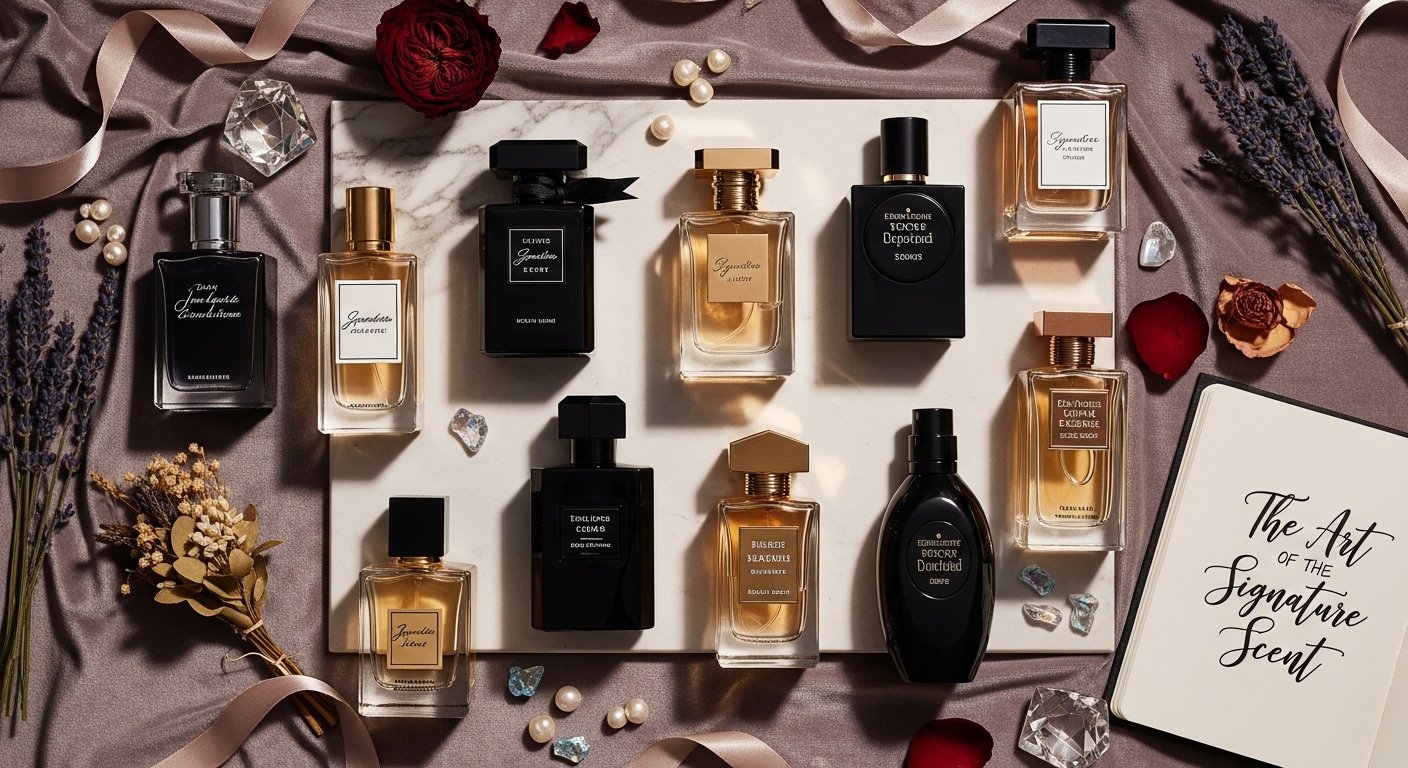
There is a distinct difference between simply smelling nice and leaving an indelible olfactory signature that lingers in a room long after you have left. Fragrance is identity in a bottle; it is the invisible accessory that completes a look without saying a word. In this curated selection, we aren’t just listing bestsellers. The focus is on the architecture of smell—how certain compositions react to the skin’s warmth, how sillage creates a memory, and how notes evolve from the sharp clarity of morning to the velvety dry-down of midnight. The criteria for selecting the top 10 perfume for women hinged on longevity, sillage, the quality of raw ingredients, and the narrative the scent tells. Every bottle mentioned here has been chosen for its ability to transcend trends and embody a specific emotional terrain. This is a study in contrasts, from transparent floral bouquets to smoky, leather-bound orientals, ensuring that whether you are a minimalist or a maximalist, there is a masterpiece here speaking directly to your chemistry.
There are few modern fragrances that have rewritten the rules of luxury quite like this transparent jewel. Maison Francis Kurkdjian’s masterpiece is built on a paradox: it is simultaneously airy and dense, sweet and metallic. The magic lies in the fusion of hedione, a jasmine derivative that lifts the scent, with a dry cedar and the medical sweetness of ambergris. What begins as a blast of burnt sugar and saffron rapidly cools into something resembling molten glass. It isn’t a perfume that sits politely on a blotter; it creates a cloud of ambroxan-laced brilliance that professional noses often refer to as “extremely radiant.”
The specific user this was engineered for thrives on recognition. This is the scent for the woman who understands that true luxury is not shouting but whispering in a frequency only the discerning can hear. The longevity is borderline problematic for some, lingering on cashmere scarves for weeks. However, a balanced view requires acknowledging its ubiquity at certain social tiers. The strength of its signature is so potent that it has suffered from its own success, occasionally becoming the default scent of gala dinners worldwide. Yet, quoting the late master perfumer Edmond Roudnitska’s philosophy, “Perfume is not just about the smell, it is a work of the mind.” Baccarat Rouge 540 operates on a cerebral level, tricking the nose with its transparency while physically clinging with the tenacity of a far heavier gourmand. The sillage makes people stop mid-sentence.
It is impossible to discuss the pantheon of feminine fragrance without paying homage to the abstract revolution of 1921. Chanel No. 5 exists not as a flower, but as the Platonic ideal of a flower. Ernest Beaux’s overdose of aldehydes—those fizzy, champagne-like synthetic molecules—marked the first time a perfume smelled intentionally unnatural, like starlight on cold marble. The core is a blur of May rose and jasmine, but the aldehydic top shears away any hint of earthiness, leaving a clean, soapy luxe that Mademoiselle Chanel requested to make a woman “smell like a woman, not a rose.”
This laboratory-created perfection is best suited for the classicist who values history but lives in the present. It functions as an olfactory cleanser, a crisp shield in a polluted world. The criticism often leveled against it is that its powderiness can read as mature or dated to an untrained nose accustomed to fruity florals. Yet, that is precisely the point. The evolution on skin, from the nose-tingling sparkle to the animalic warmth of civet-replacement bases, tells a story of transformation. A respected collector once remarked in passing, “No. 5 feels like wearing a couture glove that’s been sprayed with dry martini and expensive face cream.” It’s an embrace of contradiction. The strength is its abstractness; the weakness is that it demands a confident pH balance to prevent the florals from disappearing behind the aldehydes entirely, leaving only soap. For those whose skin harmonizes with it, there is no substitute for that golden-hued, viscous liquid.
Frederic Malle’s curated collection of perfumers gave the world this baroque, uncompromising rose by Dominique Ropion. To call it a rose perfume is a gross understatement; it is a haunting gothic cathedral made of Turkish rose, black currant, and an astonishingly heavy dose of patchouli. The opening is a clashing of cymbals—cinnamon and clove—that immediately subsides to reveal a heart of overflowing, jammy darkness. The structure relies on a massive overdose of patchouli, approximately 10% of the formula, which creates a cool, earthy counterpoint to the sweet fruit. The subsequent effect is one of dry incense and woody amber, radiating a scent described by a niche boutique owner as “Cleopatra meeting a modern power broker in a cigar lounge.”
This perfume is for the narrative-builder, the woman who carefully curates her image to project intellectual depth and unapologetic femininity. It is heavy armor, best suited for autumn leaves and deep winter nights when you need a scent that cuts through the chill. The weakness is its sheer volume; it is an extroverted beast that can easily overwhelm in summer humidity or a confined office setting. Application requires restraint, as the sillage announces arrival several minutes before you physically enter a room. What makes it a highlight in any top 10 perfume for women roundup is not just its performance but its refusal to be sweet. The dry-down is a smoky, balsamic, almost bitter resin that clings to wool coats with terrifying longevity. It captures the duality of light and shadow better than any violet-tinged attempt on the market.
In a market saturated with shouty gourmands, Glossier You changed the conversation by smelling like nothing and everything at once. It is a true “skin enhancer,” built around ambroxide and a synthetic musk called ambrette seed absolute. The genius of the formula is its reliance on a unique molecule called Cetalox, which usually acts as a background fixative but here takes center stage. The composition is sparse: clean iris root gives a starchy, pencil-shaving creaminess, while pink pepper adds a fleeting sparkle. There is no heavy floral or sticky vanilla dry-down, just a warm, slightly salty musk that mimics the scent of a clean sun-warmed nape.
This fragrance is ideal for the minimalist who hates the concept of wearing “perfume.” It is the ultimate office-friendly scent, never projecting beyond an intimate bubble but lasting on clothing for an entire day. The balanced view here involves the volatility of its formula. For some, it is a holy grail that garners endless compliments about simply smelling “expensive and clean,” while a minority experience anosmia to the specific musks, rendering the scent utterly invisible. It solves the problem of olfactory fatigue by being a background hum rather than a foreground melody. A stylist once noted during a fitting, “Glossier You doesn’t mask your chemistry; it just irons out the wrinkles.” Its note structure is deliberately liquid, adapting to hormonal shifts and body heat, making it the safest yet most personal bottle in a collection. It smells like a second skin, provided that second skin is made of cashmere and freshly printed magazines.
Before Angel arrived in 1992, the perfume world was clean and citrusy. This neon-blue star shattered norms by weaponizing sugar and patchouli. Created by Olivier Cresp, it introduced the world to the “ethyl maltol” note, a molecule that smells exactly like spun sugar, fairy floss, and caramelized strawberry. The background is a brutalist concrete block of earthy patchouli, creating a friction that defines the gourmand genre. The combination of cotton candy sweetness with a dark, woody undercurrent was so radical that it was almost rejected, yet it became the sire of an entire olfactory family.
The woman who wears Angel today is nostalgic for the power-dressing 90s and unafraid of being labeled polarizing. This is not a wallflower scent; a half-spray lasts 24 hours and can fill an elevator with its cotton-candy-from-hell trail. The weakness is obvious: it is quite possibly the most over-sprayed and divisive scent among fragrance enthusiasts. If applied too heavily, the chocolate and caramel facets turn into a suffocating cloud. Yet, there is sexy grit to the dry-down that keeps it firmly in the top 10 perfume for women lists decades later. The contrast between the juvenile top and the shadowy, cat-like patchouli base creates a sensory whiplash that embodies the “femme fatale with a sweet tooth” archetype. As a fragrance evaluator put it during a vintage versus modern comparative test, “Newer reformulations lack the skank of the 90s juice, but they’ve retained that bitter cocoa helix. It remains the smell of blue silk and dangerous lashes.” It’s a love-or-hate masterpiece that refuses to apologize.
Byredo’s cultural cachet lives in its minimalist Nordic aesthetic, and Gypsy Water is its most evocative narrative. It smells like a lucid dream about a pine forest that borders a vanilla-baked campfire. The opening is a crisp, aromatic burst of juniper berries and a squeeze of lemon, immediately mellowed by the incensy, resinous warmth of pine needles. The trick here is the ambroxan base that lifts the earthiness and prevents the composition from feeling like a literal forest-floor sludge. Instead, it oscillates between refreshing gin-like botanicals and a smooth, creamy sandalwood-vanilla dry-down.
This is a scent for the poetic bohemian constrained by an urban environment; it provides a psychological escape hatch. It’s light enough for a high-ceiling gallery opening yet rustic enough for a coastal road trip. The critical flaw, however, is the longevity. This remains the primary complaint across luxury forums: the elusive nature of Gypsy Water means it often becomes a “ghost scent” on the skin after three hours, lingering only as an indistinct memory. To quote a fellow enthusiast at a niche perfume sampling, “It’s the perfect scent to smell like you naturally exude vanilla and moss, if only it didn’t leave the party so early.” The beauty of Gypsy Water lies in its texture; it translates a philosophical fantasy into a transparent formula. The interplay of cold citrus and warm amber creates an olfactory chiaroscuro that is incredibly photogenic yet ephemeral, making it a perfect layering tool for those seeking to add a woody, whispery sphere to a skin chemistry that doesn’t project loudly.
The Ultimate Guide to the Top 10 Big Dog Breeds: Size, Temperament, and Real-World Fit
The scent that turned an entire generation onto the spicy, creamy addictiveness of sandalwood is far more complex than its singular name implies. Santal 33 is built around a combination of Australian sandalwood, cedarwood, and a heavy hit of cardamom that gives it a green, pickle-like snap in the opening. But the true secret is the leather accord; a distinct note of tanned hides and violet-tinged orris root creates a sensation that perfumer Frank Voelkl describes as “a cowboy riding into a flower shop.” That collision of rugged masculinity and delicate papery florals defines its mass appeal as a unisex powerhouse.
The ideal wearer possesses cosmopolitan edge; she wears crisp tailoring and lives in a loft with exposed brick. Santal 33 is a scent that smells like independence. It has, however, become a victim of its own cultural saturation, particularly in the concrete canyons of New York City where it functioned as the uniform for the creative class. The downside is the association with a specific, somewhat gentrified aesthetic; smelling it randomly might trigger a “memory of a hotel lobby” rather than a unique personal signature. Nevertheless, the structural integrity of the perfume is unmatched. The dry-down is a magnetic, musky sandalwood that soothes like dry air on hot skin. A boutique fragrance curator beautifully described the experience by saying, “Santal 33 cracks open the clean sandalwood nut and smokes it over cedar embers.” The endurance is brutalist, lasting through spin cycles and steam showers, making it a bulletproof choice for the woman who detests reapplying.
Perched at the opposite end of the spectrum from the smoky ambroxan bombs is this rose-tinted nuclear warhead from Parfums de Marly. Delina Exclusif takes the bright, lychee-sour freshness of the original Delina and buries it under a mountain of creamy, powdery incense and oud. The composition features a trifecta of Turkish rose, pear, and a ghostly vanilla dust cloud. The “Exclusif” modifier translates to an overdose of white musk and a slightly almondy heliotrope note that makes the scent feel fuzzy, like touching a velvet painting. It projects a bubble of unapologetic princess-core romance that somehow retains a luxurious, adult sophistication.
This is tailored for the woman who wants to be perceived as expensively groomed and entirely untouchable. It solves the problem of fleeting florals by fixing them with a woody-amber explosive base that lasts 12 hours on fabric. It is a bridal scent by default, but the opulent density works best at upscale evening events. The disadvantage is the unrelenting sweetness—a mix of honeyed pear and marshmallow that can become claustrophobic to the wearer if not fully enamored with the gourmand genre. Balanced review acknowledges it’s a masterpiece of blending but lacks subtlety. An expert panelist at a fragrance foundation event described the dry-down quite succinctly: “It smells like pink silk charmeuse infused with whipped cream and rose dust; it’s not a suggestion, it’s an edict.” In the realm of modern floral-musks, it stands defiantly against the “clean girl” aesthetic, choosing instead to coat the skin in a high-calorie, rich sherbet that commands attention.
To understand Molecule 01 is to understand a sleight of hand. It contains exactly one ingredient: Iso E Super, a molecule that smells differently on every person. Chemically, it manifests as a velvety, woody note similar to cedar with traces of ambergris, but often people cannot smell it on themselves. It works via a disappearing-reappearing act, leaving a shimmering trail that onlookers perceive as “not perfume, just a good smell.” It does not have a traditional top, heart, or base; it is a linear, minimalist block of woodiness that unlocks hidden facets of human skin.
This is the scent for the philosopher, the woman who is utterly tired of scent profiles and wants to smell like a scientific abstraction. It is also the most prolific layering tool in history, adding a radiant, woody volume to other standard perfumes. The primary drawback is the sheer invisibility to the wearer due to anosmia. You might spray it and panic it’s gone, only to have a stranger inhale you like a fine wine. The balanced insight reveals that for those who can detect the molecule, it’s an elegant, dry, pencil-shaving musk; for those who can’t, it allows natural pheromones to take the stage. A chemist analyzing the profile noted that “Iso E Super interacts with the olfactory receptors in a rhythm rather than a block, flashing on and off.” It is the antithesis of a top 10 perfume for women list that relies on classic femininity, yet it is universally the most complimented by men, likely because it frames a woman’s natural chemistry without competing with it. It’s the art of subtraction perfected in liquid form.
Plunging into the darkness of this heady perfume is a visceral experience. Black Orchid dismantles the binary between masculine and feminine notes by fermenting black truffle, ylang-ylang, black currant, and dark chocolate into one glossy, liquor-like substance. The opening is a damp, earthy mushroom note that shocks the senses into alertness before a thick, camphorous spice and rich floral accord emerges. This is the “dirtiest” clean formal scent in existence. The gardenia and jasmine give a white floral luminosity, but it’s instantly dragged into the deep end by a base of patchouli, incense, and vetiver that smells of upturned earth after rain.
The ideal subject for Black Orchid is the femme fatale who bypasses sweetness for carnal floral darkness. It is best suited for black-tie evenings and intimate, low-lit jazz bars where the scent can intermingle with cigar smoke and chilled vodka. It solves the problem of gown-appropriate scents being too boring. The weakness is a lack of forgiveness regarding over-application. One micro-spray is dinner-party appropriate; two makes you the olfactory villain of the subway. Describing the sensation of wearing it, an aesthetic director once wrote, “Black Orchid isn’t a flower; it’s the elegant decay of a bouquet left on a marble vanity after midnight.” The richness of the vanilla absolute and the creamy sandalwood come out strictly in the final dry-down, which takes a full shift of wear time to reveal itself. It remains a work of gothic art, a bold statement proving perfume can be sexual without being sugary.
To navigate the psychological landscape of these specific fragrances, it’s helpful to see their performance and character side-by-side. The following table breaks down the essential data points for application in the real world.
| Fragrance Name | Dominant Olfactory Family | Ideal Context & Season | Longevity Projection Range |
|---|---|---|---|
| Baccarat Rouge 540 | Woody Amber Floral | Year-round signature / Evening | 10+ hours (Eternal) |
| Chanel No. 5 | Aldehydic Floral | Formal Luncheons / Spring & Fall | 6-8 hours (Moderate) |
| Portrait of a Lady | Dark Rose Chypre | Romantic Evenings / Winter & Autumn | 12+ hours (Massive) |
| Glossier You | Clean Musk Skin Scent | Office & Errands / Year-round | 5-7 hours (Intimate) |
| Mugler Angel | Patchouli Gourmand | Clubbing & Nightlife / Winter | 12+ hours (Nuclear) |
| Byredo Gypsy Water | Woody Citrus Aromatic | Casual Daywear / Summer & Spring | 3-5 hours (Transient) |
| Le Labo Santal 33 | Leathery Woody | Creative Workspaces / Fall & Winter | 10+ hours (Heavy) |
| Delina Exclusif | Fruity Floral Oud | Formal Events & Dates / Spring | 12+ hours (Eternal) |
| Molecule 01 | Linear Iso E Super | Minimalist Wear & Layering / Year-round | 8+ hours (Shimmering) |
| Tom Ford Black Orchid | Dark Oriental Floral | High-Stakes Evenings / Winter | 8-10 hours (Bold) |
Selecting a signature from the top 10 perfume for women isn’t about finding the most expensive bottle or the loudest trail; it’s about uncovering the scent that feels like a biographical detail of your own life. The architecture of these fragrances ranges from the metallic, laughing transparency of Baccarat Rouge to the fungal, damp darkness of Black Orchid, proving that feminine perfumery holds a vast spectrum of emotional depth. Whether your skin chemistry gravitates toward the fizzy, high-art abstraction of No. 5 or the futuristic intimacy of Molecule 01, a great perfume should feel like a discovery, not a costume. The dry-down of every scent mentioned here is masterfully engineered to interact with heat and humidity in a unique dance, turning a simple spritz into a distinctive aromatic footprint. The art of wearing fragrance is ultimately the art of choosing a secondary memory for the people you meet, so feel free to ignore trends and let your olfactory instincts guide you toward the liquid that truly sparks joy.
Your skin is not a blank canvas; it’s a living chemical organ. Perfume smells different on each body because of variations in oil concentration, pH levels, and even diet. A heavy gourmand like Mugler Angel can turn into a bitter metallic mess on highly acidic skin because the ethyl maltol clashes with the sourness. Conversely, dry skin tends to eat volatile top notes instantly. To get the truest read, apply a scent to the pulse points like the inner elbows or behind the knees, areas that generate warmth without excessive sebum that can distort the base notes.
The distinction is purely about concentration, not necessarily strength of smell. Eau de Parfum usually holds 15-20% oil, offering a denser, heavier base note experience that sits closer to the skin. Eau de Toilette pushes the brighter, volatile top notes forward at a lower 5-15% concentration, making it project loudly for a brief honeymoon period before fading. Baccarat Rouge 540 is a prime example; its extrait version is less about sillage and more about an ambery, almond paste texture, while the original Eau de Parfum is a radiating cloud of sharp cedar and hedione.
The longevity issue with clean musks is due to large molecules that fatigue the wearer’s nose before they actually evaporate. To extend the life of a skin scent, hydration is critical. Apply an unscented, oil-based lotion immediately before spraying to create a lipid barrier that the musk molecules can bind to rather than evaporating off dry skin. Spraying the nape of the neck and the fabric collar provides a slow-release mechanism. Layering it over a thin, invisible glaze of something like Molecule 01 also gives the “clean girl” aesthetic a woody scaffolding that extends its life for an entire workday.
Wearing a dense, dark oriental in summer heat is risky but doable if you deconstruct the application. Heat amplifies the projection of patchouli and truffle notes to an aggressive degree. The trick is to spray low and away. Apply a single tight spritz to the back of the knees or the ankles. Heat rises, so the scent will waft up in a softened, diffused manner rather than a direct, suffocating blast to the face. You can also “blot” it by spraying a cotton ball, tucking it into the center of a bra, and letting body heat gently warm the oils without the combustion effect of spraying it directly on pulse points.
Anosmia to your own scent, or nose-blindness, typically happens with massive, ambroxan-heavy molecules or very light citruses. You need a scent with high-contrast facets that bounce in and out of perception, like the flashing Iso E Super in Escentric Molecules. Avoiding linear “wall of sound” fragrances helps. Choose a highly complex chypre like Portrait of a Lady. Chypres rely on a contrast between bright bergamot, dark labdanum, and earthy patchouli, a dynamic wave that pushes through the brain’s filtering mechanism, allowing the scent to re-emerge hours later without the need for reapplication.