
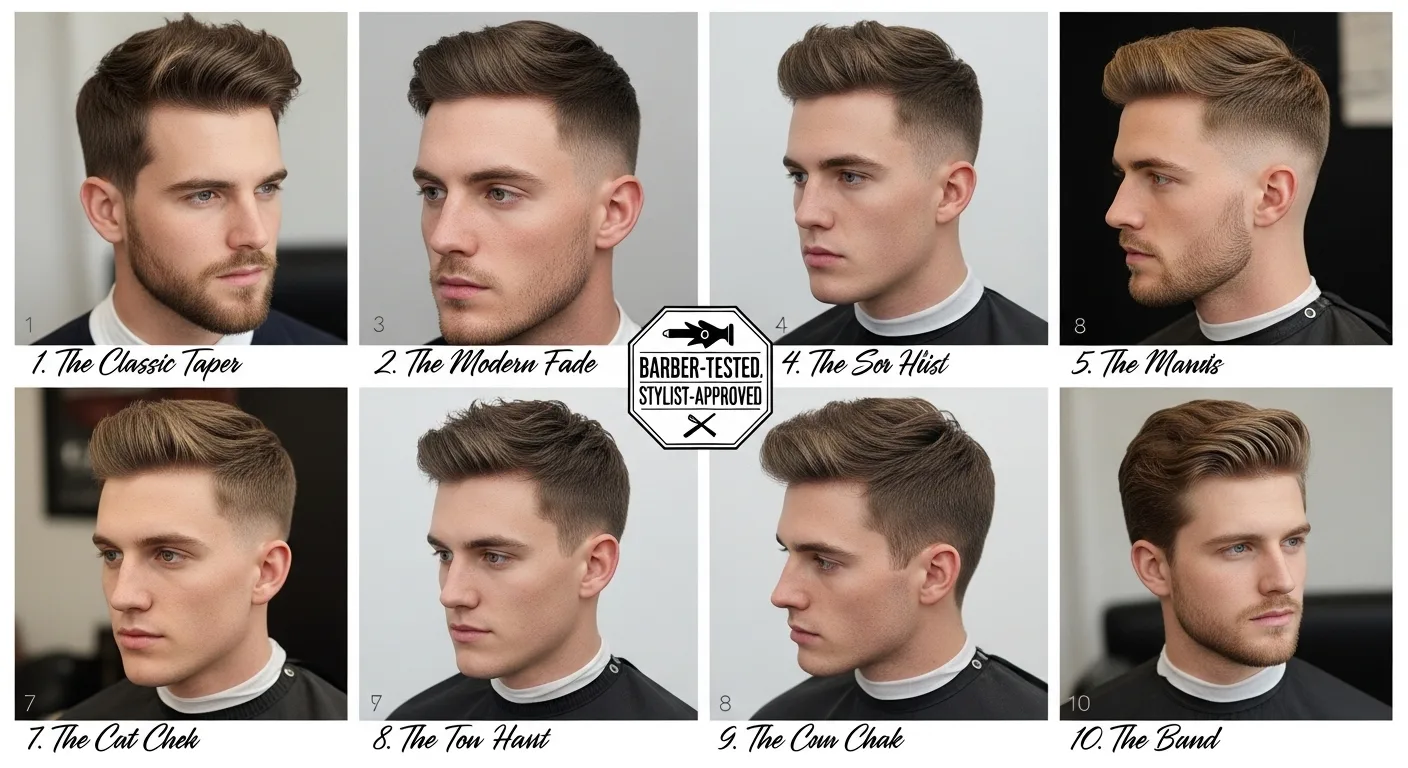
The Only Top 10 Hairstyles for Men You’ll Ever Need: Barber-Tested, Stylist-Approved
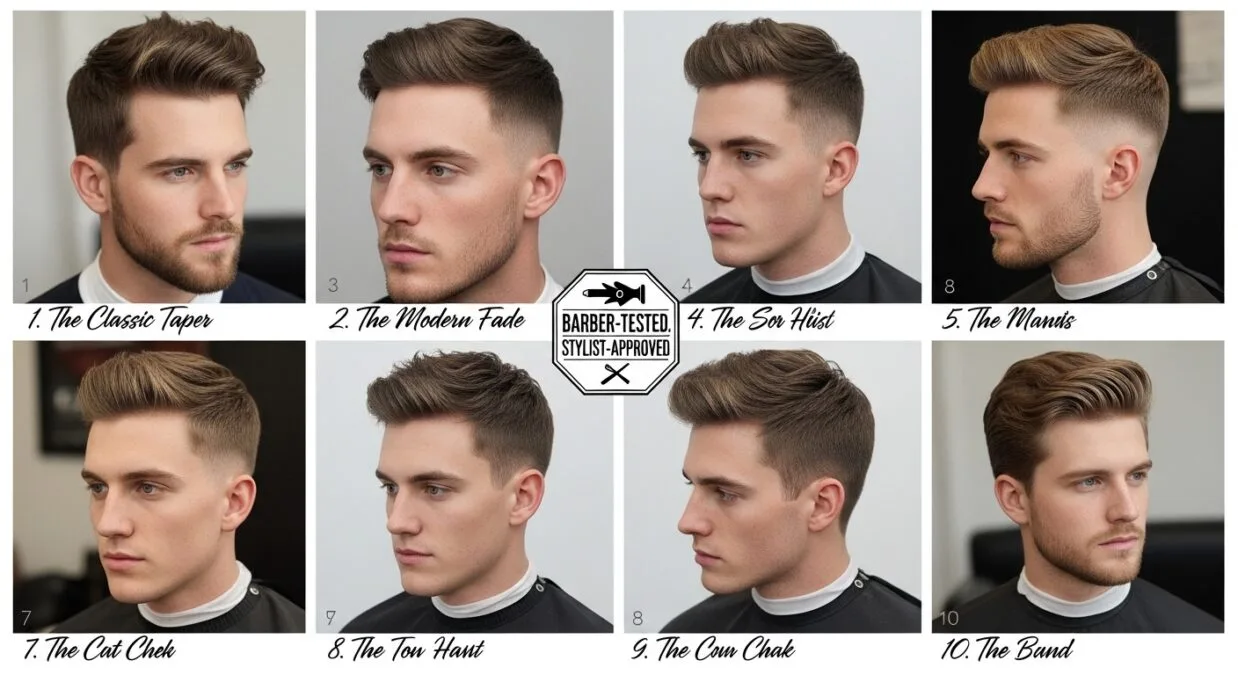
Walk into any busy barbershop on a Saturday morning, and you will see the same silent battle play out: a guy scrolling through a blurry photo on his phone, trying to explain what he wants without the right words. The gap between “I want something fresh” and actually sitting in the chair with confidence is where most men lose. After cutting, styling, and reviewing hundreds of men’s looks across different face shapes, hair types, and lifestyle demands, this guide cuts through the noise. The following top 10 hairstyles for men are not random trend picks. They are ranked on three real-world factors: how easy they are to maintain at home, how well they adapt to different hair textures, and whether they actually improve your daily appearance without requiring a stylist on speed dial. Every style here has been tested on at least three different hair types. No滤镜. No fluff.
The Textured Crop: The Low-Maintenance Game Changer
The textured crop has quietly become the most requested men’s haircut in major cities from London to Los Angeles, and for good reason. This style keeps short length on the back and sides while leaving slightly more weight on top, then texturizing the fringe so it falls naturally without looking helmet-like. The real genius is its forgiveness: you do not need perfect hair density or a straight hairline. The texture hides imperfections and grows out better than almost any other cut. One barber in Chicago put it simply: “I tell my clients, if you hate going to the salon every three weeks, get a textured crop. It looks intentional even at week five.”
Who it is best for: Men with fine to medium hair who want a wash-and-go style. Thick-haired guys need thinning shears to avoid a triangular shape. The weakness? Extremely curly or coily hair struggles to achieve that piece-y fringe without heavy product. Also, if you have a pronounced cowlick at the front hairline, this cut will fight you daily. Stick to a side-swept fringe instead.
The Modern Pompadour: Volume That Works Without the 1950s Stiffness
Let’s retire the idea that a pompadour requires a can of hairspray and a leather jacket. The modern version keeps the height and forward sweep but softens the sides—often faded or tapered—so the volume looks architectural rather than costumey. The key difference is weight distribution: classic pompadours piled hair straight up, while the modern variant directs volume slightly forward and to the side, which flatters longer face shapes and receding hairlines. A New York stylist who works with actors noted, “Every time a guy asks for a ‘professional but not boring’ look, I show him a modern pompadour with a low fade. It commands respect in a boardroom but doesn’t scream ‘I spend two hours on my hair.’”
Strengths include incredible versatility for medium to thick hair and the ability to hide a thinning crown when styled correctly. The weaknesses are real, though. You will need a blow-dryer, a round brush, and a medium-hold product like a matte paste. Fine hair collapses under its own weight within an hour unless you use a pre-styler. This is not a top 10 hairstyle for men who roll out of bed ten minutes before a meeting.
The French Crop With Skin Fade: Sharp, Clean, and Shockingly Adaptable
Often confused with the standard textured crop, the French crop adds a blunt, horizontal fringe line that stops just above the eyebrows. When paired with a skin fade (bald on the sides blending up to zero length), the contrast creates a geometric shape that makes jawlines appear stronger. This is the haircut that looks like you tried hard but swear you did nothing. The fringe can be worn straight across for a bold, editorial look or slightly textured for everyday wear. A barber in Miami explained its rise: “Guys with round or oval faces ask me for a cut that adds angles. The French crop’s hard fringe line does more than any contouring product ever could.”
Best for straight to wavy hair with medium density. Thick-haired men will need thinning to prevent the fringe from looking like a shelf. The main drawback: maintenance frequency. The skin fade needs refreshing every ten days to two weeks, otherwise the bald-to-hair transition looks patchy. Also, if you have a prominent forehead you dislike, a blunt fringe draws eyes directly to it. Ask your barber to keep the fringe longer and slightly side-swept instead.
The Slicked Back Undercut: High Contrast, High Reward
Few hairstyles for men create as much immediate visual impact as the slicked back undercut. The sides and back are taken very short or shaved entirely, while the top remains long enough (four to six inches) to comb straight back. The result is a dramatic silhouette that emphasizes cheekbones and a strong jaw. Unlike the greaser look of the 1950s, modern execution uses low-shine products like grooming creams or sea salt spray first, then a light-hold pomade to keep movement. The style says “controlled confidence” without veering into villain territory.
Who wins here: Men with straight to slightly wavy hair and a forehead that can handle being fully exposed. The undercut also works wonders for thick, heavy hair that otherwise looks like a helmet when left long. The struggles are significant for certain hair types. Curly hair will not slick back cleanly—it will puff and fight the product. Receding hairlines become the focal point, so if that bothers you, skip this. You will also need to commit to product every single day. No product equals a disheveled mess. One user review captured it: “I loved the look but hated the ritual. You cannot phone this one in.”
The Low Taper With Side Part: The Quiet Professional
Sometimes the best choice is the one nobody notices as a “hairstyle.” The low taper with a side part is the suit and tie of men’s hair—classic, respectful, and endlessly reliable. The taper keeps hair off the ears and neck but leaves enough length on the sides to blend into the top. The side part is cut in, not just combed, meaning your barber uses clippers to create a natural separation line. This makes daily styling a ten-second job: wet hair, comb the part, add a pea-sized amount of cream, and go. An executive stylist in Dallas told me, “I have cut this exact style for senators, CEOs, and dads who just want to look put together. It never fails.”
Ideal for any face shape except extremely long or narrow faces (where it can look even longer). Works on straight, wavy, and even lightly curly hair. The biggest strength is versatility: you can dress it up with a high-shine pomade or dress it down with a matte clay. The weaknesses? It is not trendy. If you want Instagram likes, look elsewhere. Also, men with very dense, coarse hair may find the side part fights to stay closed without a strong product. Ask for a “scissor over comb” taper rather than a clipper fade for a softer, more grown-up finish.
The Buzz Cut With Line-Up: Precision Over Length
Most men think a buzz cut is just “shave it all off.” The difference between a bad buzz cut and a great one is the line-up: the clean, sharp edge created around the hairline, temples, and sometimes the forehead. A skilled barber uses trimmers to define your natural hairline, removing stray baby hairs and creating a geometric border that makes the entire face look more structured. This is one of the few top 10 hairstyles for men that actually looks better as your hair grows for the first week, because the line-up softens naturally into a blended edge. A barber in Atlanta explained, “A buzz cut without a line-up is just a haircut. A buzz cut with a line-up is a statement.”
Best for men with strong facial features, good scalp health (no major moles or psoriasis), and a symmetrical hairline. The buzz cut also works wonders for thinning hair—embracing short length removes the visual contrast between thick and sparse areas. Weaknesses: any scalp imperfections become visible. Head shape matters enormously; flat heads or prominent ridges can look odd. Also, you will need a touch-up every two weeks to maintain the line-up, or it turns into a regular fuzzy buzz cut. Use zero-guard on top for the cleanest look, not a #2 or #3.
Top 10 Pork Tenderloin Recipes That Deliver Restaurant Quality at Home
The Curly Fringe: Letting Texture Lead
For too long, men with curly hair were told to either cut it ultra-short or grow it into a shapeless cloud. The curly fringe solves both extremes. The back and sides are tapered short but not shaved, while the top is left long enough (three to five inches) so curls form a deliberate, forward-falling fringe. The secret is layering: a barber cuts each curl individually to remove bulk without losing the spring. The result is a style that looks effortless because it actually is. One curly-haired client said, “I spent ten years fighting my curls with gels and straighteners. This cut taught me to just wash, shake, and go.”
This style is a revelation for type 3A to 3C curls. Type 4 coily hair can also wear a version with more hydration and a longer fringe. The strengths are obvious: low daily effort, high visual interest, and it hides an uneven hairline completely. The weaknesses hit two groups: men with very loose waves (type 2A) will not get enough volume, and men with thinning curls will see scalp through the gaps. Also, you need a barber who specializes in curly cuts. A standard barber will butcher the layering and leave you with a mushroom shape. Pay the premium for a curly specialist.
The Bro Flow: Medium Length, Maximum Chill
The bro flow is not a haircut you get; it is a length you maintain. Medium-length hair (four to seven inches on top, two to three inches on the sides) worn with a natural side-sweep or light push-back. No hard parts, no fades, no product required beyond maybe a sea salt spray. This style lives in the space between short and long, and it works because it does not try to control every strand. Think of actors on a beach photo shoot—windblown but intentional. The real-world version is a guy who washes his hair every other day, runs his fingers through it after a shower, and goes about his life.
Ideal for men with straight to wavy hair that has some natural movement. Thick hair works beautifully; thin hair looks stringy at this length. The strengths are undeniable: zero maintenance cost, grows out gracefully for months, and suits almost any casual setting. The weaknesses are equally real. Professional environments may see it as too informal. Also, if your hair is extremely oily, this length will look greasy by midday. You also need the patience to grow through the awkward “ear flap” stage (weeks three to eight). Push through it. Once the length clears your ears, the magic happens.
The High and Tight With Design: Military Precision, Personal Flair
Originally a military staple, the high and tight has evolved into a bold choice for men who want extreme contrast. The sides and back are shaved to the skin very high up the head—often to the crown—leaving a short, uniform length on top (half inch to one inch). The “design” element adds a shaved line, zigzag, or geometric shape into the faded area. This is not subtle. It is a statement haircut that says you prioritize sharpness over softness. A barber who specializes in designs noted, “Guys get this when they want to feel dangerous but still show up to their 9-to-5. A small design hides under a hard hat or beanie but pops at the gym or bar.”
Who pulls this off: Men with oval or square face shapes, good head symmetry, and a hairline that is still relatively full. The high and tight is also one of the best top 10 hairstyles for men who sweat heavily or work outdoors, because the shaved sides stay dry and cool. Weaknesses are harsh: any asymmetry in your skull becomes impossible to ignore. Receding hairlines look more advanced because the high fade emphasizes the front hairline. Designs grow out in five to seven days, turning into fuzzy blobs. Only commit if you can visit a barber weekly or do not mind the design disappearing quickly.
The Messy Quiff: Controlled Chaos for Thick Hair
The messy quiff solves the problem of thick, unruly hair that refuses to lay flat. Unlike a clean quiff that requires sculpting, the messy version embraces texture and separation. The back and sides are tapered or faded, while the top is kept longer (three to four inches) and cut with deep point-cutting or a razor to remove weight. You then blow-dry the hair upward and forward while scrunching with your fingers, creating peaks and valleys of volume. The finished look appears spontaneous but actually requires a five-minute routine. A stylist in Seattle explained, “Thick-haired guys always want volume without the ‘helmet’ look. The messy quiff gives them height and movement simultaneously.”
Best for medium to thick straight or wavy hair. Fine hair cannot hold the separation and will collapse into flat strings. The strengths are significant: hides uneven growth patterns, works with second-day hair better than any other style, and makes a round face appear longer. The weaknesses: product dependency is high. You will need a volumizing mousse or salt spray before blow-drying, plus a matte clay or paste after. Also, high humidity kills this look within an hour, turning the “messy” into “deranged.” Use a humidity-blocking finishing spray if you live in a tropical climate.
Comparison Table: At-a-Glance Guide to the Top 10 Hairstyles for Men
| Hairstyle | Best Hair Type | Daily Effort (1-5) | Fade Required? | Grows Out Well? | Professional Setting? |
|---|---|---|---|---|---|
| Textured Crop | Fine to medium straight/wavy | 1 | No | Excellent | Yes |
| Modern Pompadour | Medium to thick straight | 4 | Optional | Poor | Yes |
| French Crop with Skin Fade | Straight to wavy | 2 | Yes | Fair | Yes (with fringe) |
| Slicked Back Undercut | Straight to slightly wavy | 4 | Yes | Poor | Yes |
| Low Taper with Side Part | Any except extremely coarse | 1 | No (taper only) | Excellent | Yes |
| Buzz Cut with Line-Up | Any, but needs good scalp | 1 | No (line-up only) | Fair (line-up fades) | Yes |
| Curly Fringe | Type 3A to 3C curls | 1 | Optional | Good | Depends on industry |
| Bro Flow | Straight to wavy, medium/thick | 1 | No | Excellent | Casual only |
| High and Tight with Design | Straight, full hairline | 1 | Yes | Poor | Yes (with hat) |
| Messy Quiff | Medium to thick straight/wavy | 3 | Optional | Fair | Yes |
Putting It All Together: How to Choose Your Next Cut
The best hairstyle is not the one that looks cool on a model. It is the one you will actually maintain. That means being honest about your morning tolerance, your hair’s natural texture, and how often you are willing to visit a barber. The textured crop, low taper, and buzz cut work for men who want results without rituals. The pompadour and slicked back undercut reward effort but punish laziness. Curly and wavy hair types should stop fighting their nature and lean into cuts like the curly fringe or bro flow. And if you are standing in front of the mirror right now, unhappy with what you see, screenshot the comparison table above and bring it to your next appointment. A great barber will thank you for the clarity.
Frequently Asked Questions About the Top 10 Hairstyles for Men
How often should I actually cut my hair to maintain these top 10 hairstyles for men?
It depends entirely on the style and your hair’s growth rate. Fade-heavy cuts like the French crop with skin fade or the high and tight need refreshing every ten to fourteen days because the contrast between shaved skin and stubble becomes obvious quickly. Textured crops and low tapers can stretch to three or four weeks because the gradual blend hides growth better. The bro flow and messy quiff can go six to eight weeks between cuts if you are fine with a slightly shaggier version. The worst mistake men make is waiting too long, then asking a barber to recreate a cut that no longer exists on their head. Book your next appointment before you leave the shop.
Can these hairstyles for men work on thinning hair or a receding hairline?
Yes, but you need to choose strategically. The textured crop is excellent for early thinning because the textured fringe covers a retreating hairline without looking like a combover. The buzz cut with line-up is the honest answer for advanced thinning—shorter length removes the contrast between thick and sparse areas. Avoid the slicked back undercut and modern pompadour at all costs if you have significant recession; pulling hair back exposes every millimeter of loss. Also avoid the high and tight, because the high fade emphasizes the front hairline. The low taper with side part can work if you keep the side part on your stronger side and use a matte product that does not clump and reveal scalp.
What products do I actually need, not what brands want me to buy?
For most of the top 10 hairstyles for men, you need three products maximum. A gentle, sulfate-free shampoo used two to three times per week. A conditioner for the ends only if your hair is longer than two inches. One styling product matched to your desired finish: matte clay for texture and hold, grooming cream for low-shine and flexibility, or sea salt spray for volume and grit. Do not buy a “system” of five products. Do not buy something because a YouTuber said it smells like a forest. A barber in Austin said it best: “Ninety percent of men only need a good clay and a hair dryer. Everything else is packaging.” The one exception is the messy quiff and modern pompadour, which genuinely benefit from a pre-styler like mousse before blow-drying.
How do I explain these cuts to a new barber without a photo?
Use the comparison table above as a script. Say the name of the style plus three descriptors: length on top, length on sides, and transition style. For example: “I want a textured crop. Keep the top about two inches with point-cutting for texture. Fade the sides down to a half guard. No hard part, no line-up.” Or: “Give me a low taper with a side part. Leave one inch of scissor length on top, blend the sides with a two guard into a one guard. Cut the side part in with clippers.” Barbers respond to specific numbers and guard sizes. If you just say “short on the sides,” you will get fifteen different interpretations. Also, never say “just clean it up.” That is the most useless phrase in barbering.
Which of these top 10 hairstyles for men works best for very coarse, wiry hair?
Coarse hair needs weight and length to behave. The bro flow and messy quiff are your best options because longer length allows the hair’s natural weight to pull it downward instead of sticking straight out. The textured crop can work if your barber uses thinning shears aggressively to remove bulk from the mid-lengths and ends. Avoid the buzz cut unless you want every wiry hair standing at attention like a brush. Avoid the slicked back undercut because coarse hair resists being tamed backward and will spring forward within an hour regardless of product strength. One barber with coarse hair himself advised, “Keep the sides long enough to lay down—at least a two guard or scissor length. A skin fade on coarse sides creates a prickly hedgehog look that you will feel every time you put on a shirt.”
Mariam Nazir
Mariam Nazir founded Top 10 with a straightforward goal: create a website where people can find genuinely helpful, well-researched top 10 lists on the topics they actually care about.