
 11
11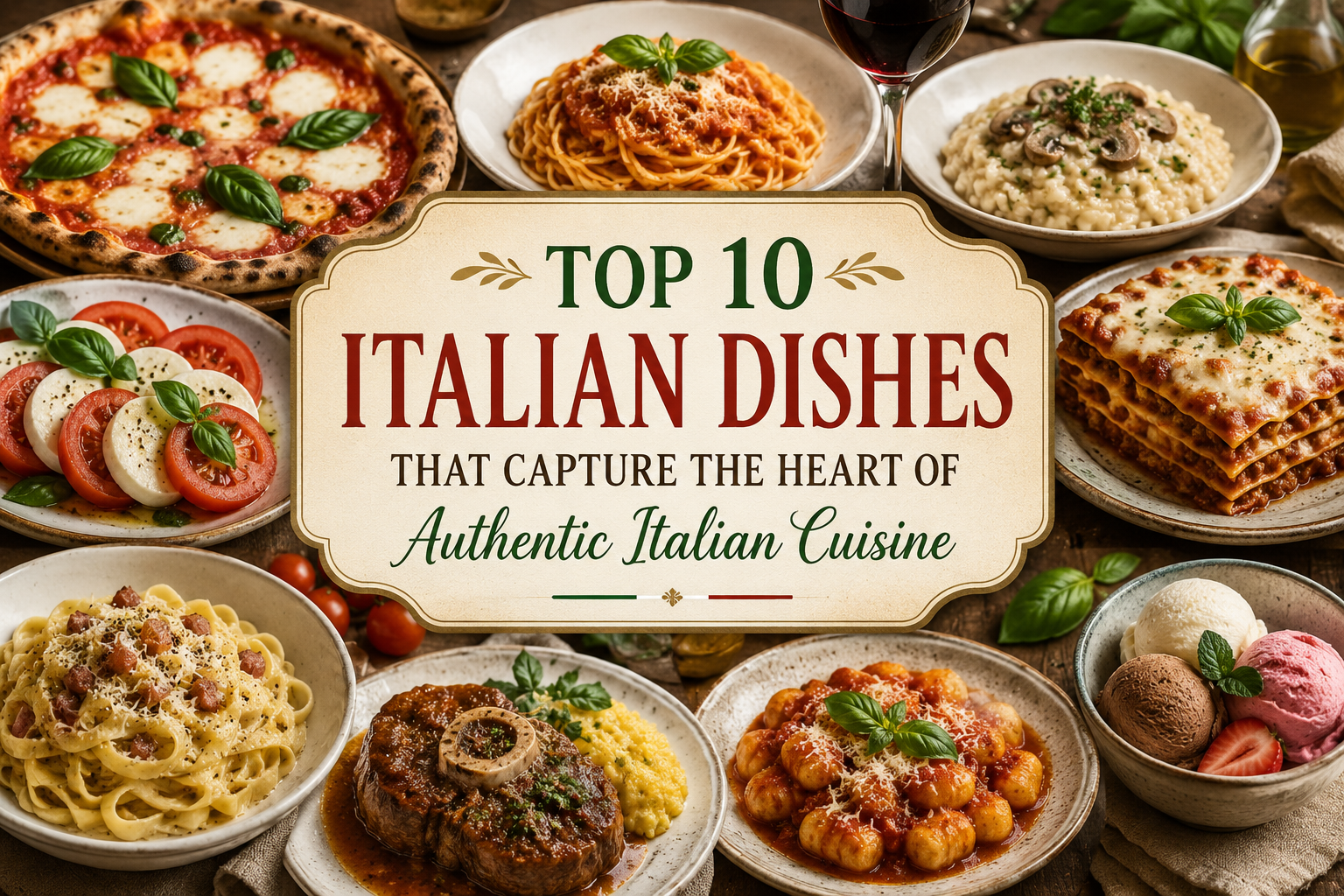
Italian food holds a unique place in global dining because it balances simplicity with deep flavor. The best Italian meals rarely rely on complicated techniques or endless ingredients. Instead, they focus on quality olive oil, fresh herbs, slow-cooked sauces, handmade pasta, aged cheese, and regional traditions passed down through generations. The appeal of the top 10 italian dishes comes from this ability to turn humble ingredients into unforgettable meals.
This roundup evaluates dishes based on cultural importance, flavor complexity, regional identity, worldwide popularity, ingredient harmony, and real-world dining versatility. Some dishes thrive in family kitchens, while others dominate fine dining menus. Together, they represent the soul of Italian cooking far better than trendy restaurant reinterpretations or heavily commercialized versions.
| Dish | Region of Origin | Flavor Profile | Best Occasion | Main Ingredients | Difficulty Level |
|---|---|---|---|---|---|
| Pizza Napoletana | Naples | Smoky, tangy, creamy | Casual gatherings | Dough, tomato, mozzarella | Moderate |
| Lasagna alla Bolognese | Emilia-Romagna | Rich, layered, savory | Family dinners | Ragù, béchamel, pasta | High |
| Risotto alla Milanese | Lombardy | Creamy, buttery, aromatic | Elegant meals | Arborio rice, saffron | Moderate |
| Spaghetti Carbonara | Rome | Silky, salty, peppery | Quick comfort food | Eggs, guanciale, Pecorino | Moderate |
| Osso Buco | Milan | Deep, hearty, slow-cooked | Winter dining | Veal shanks, wine, broth | High |
| Ravioli Ricotta e Spinaci | Tuscany | Delicate, creamy | Romantic dinners | Fresh pasta, ricotta | High |
| Parmigiana di Melanzane | Southern Italy | Comforting, cheesy | Vegetarian meals | Eggplant, tomato sauce | Moderate |
| Fettuccine Alfredo | Rome | Creamy, buttery | Indulgent lunches | Butter, Parmesan, pasta | Easy |
| Arancini | Sicily | Crispy, savory | Street food snacks | Rice, cheese, ragù | Moderate |
| Tiramisu | Veneto | Sweet, coffee-rich | Desserts | Mascarpone, espresso | Easy |
Among the top 10 italian dishes, Pizza Napoletana remains the clearest expression of how minimal ingredients can produce extraordinary flavor. Originating in Naples, this pizza relies on high-hydration dough, San Marzano tomatoes, fresh mozzarella, basil, olive oil, and blistering heat from a wood-fired oven. The crust should be airy at the edges yet soft in the center, allowing the toppings to remain balanced rather than overloaded.
What separates authentic Neapolitan pizza from mass-market versions is restraint. Italian chef Franco Pepe once remarked, “The dough should breathe as much as the toppings.” That philosophy explains why traditional versions avoid excessive cheese or heavy sauces. This dish works best for diners who appreciate ingredient purity and texture contrast. Its only drawback is that authentic preparation leaves little room for shortcuts. A weak dough fermentation or poor tomato quality becomes immediately obvious.
Lasagna alla Bolognese earns its place in the top 10 italian dishes because it represents Italian comfort cooking at its most rewarding. Originating from Emilia-Romagna, true lasagna uses slow-cooked ragù, silky béchamel sauce, fresh egg pasta, and Parmigiano-Reggiano. Each layer contributes moisture, richness, and structure without becoming overwhelming.
Many versions outside Italy lean too heavily on mozzarella or tomato sauce, losing the refined balance that defines the authentic recipe. Proper ragù should simmer for hours to develop sweetness and depth. The dish suits large family meals, celebrations, and cold-weather dining. Its main weakness lies in preparation time. Excellent lasagna demands planning and patience, though the payoff is unmatched richness and flavor integration.
Top 10 Pork Chop Recipes That Deliver Restaurant Flavor at Home
Risotto alla Milanese stands out among the top 10 italian dishes because it transforms rice into something luxurious. The signature saffron gives the dish its golden hue and floral aroma, while butter and Parmesan create the creamy texture that defines northern Italian cuisine.
The strength of risotto lies in technique. Constant stirring gradually releases starches, producing a texture that should flow gently across the plate rather than sit stiffly. Italian culinary writer Marcella Hazan famously described perfect risotto as “a wave, not a mound.” This dish is ideal for refined dinners and wine pairings. The downside is timing. Risotto waits for nobody; even a few extra minutes can turn it gummy or heavy.
Few dishes spark stronger debates than authentic carbonara. As one of the top 10 italian dishes, it succeeds because of its precision. Traditional Roman carbonara contains no cream. The sauce forms naturally from eggs, Pecorino Romano, rendered guanciale fat, black pepper, and pasta water.
The magic comes from temperature control. The eggs should coat the pasta in a silky emulsion rather than scramble into curds. Carbonara appeals to diners who enjoy bold salty flavors and fast cooking with technical finesse. One weakness is how frequently it gets misrepresented. Bacon, cream, garlic, and onions often dilute the authentic Roman identity that makes the original recipe exceptional.
Osso Buco delivers one of the richest flavor experiences in the top 10 italian dishes lineup. Traditionally prepared with veal shanks braised in wine, broth, vegetables, and herbs, this Milanese specialty develops incredible tenderness over long cooking periods. The marrow inside the bone provides extra depth and buttery texture.
The dish works especially well during colder months when diners crave hearty meals with layered savoriness. Gremolata, a garnish made from parsley, garlic, and lemon zest, prevents the richness from becoming too heavy. The challenge with Osso Buco lies in execution. Poorly braised veal turns dry, while rushed cooking prevents connective tissue from fully softening. When prepared correctly, though, it becomes one of Italy’s most memorable meat dishes.
Fresh ravioli stuffed with ricotta and spinach highlights the refined side of Italian cooking. Among the top 10 italian dishes, it demonstrates how texture matters just as much as flavor. The filling should remain light and creamy, while the pasta wrapper stays thin enough to avoid chewiness.
This dish thrives with simple sauces such as sage butter or light tomato sauce because overpowering additions hide the subtle dairy sweetness of the ricotta. Handmade ravioli particularly appeals to diners who value craftsmanship and fresh pasta traditions. Its downside is fragility. Poor sealing or overcooking easily ruins texture and presentation. Despite this, few dishes feel more authentically homemade.
Parmigiana di Melanzane proves that meatless Italian dishes can feel just as satisfying as slow-cooked ragù or braised meats. Layers of fried eggplant, tomato sauce, mozzarella, basil, and Parmesan create a rich casserole-style dish that has become a staple across southern Italy.
The secret lies in balancing moisture. Properly salted and fried eggplant absorbs flavor while maintaining structure. Weak versions become watery or oily, which explains why this dish divides opinions when poorly executed. At its best, Parmigiana feels deeply comforting without becoming overly heavy. It works especially well for shared dining and vegetarian-friendly menus.
Fettuccine Alfredo deserves recognition among the top 10 italian dishes despite the confusion surrounding its international adaptations. Authentic Roman Alfredo uses only butter, Parmesan cheese, and pasta water. The creamy texture comes from emulsification rather than heavy cream.
This simplicity makes execution surprisingly technical. The sauce must cling smoothly to the pasta without separating. Outside Italy, restaurants frequently overload the dish with cream, chicken, or garlic, creating something entirely different. Proper Alfredo remains elegant, rich, and restrained. It is best suited for diners seeking comfort food without aggressive seasoning or acidity.
Arancini showcase Sicily’s talent for transforming leftovers into culinary icons. These fried rice balls are usually stuffed with ragù, mozzarella, peas, or ham before being breaded and deep-fried until crisp. Their appeal comes from the contrast between crunchy exterior and soft, savory filling.
Among the top 10 italian dishes, arancini stand apart because they bridge street food and traditional home cooking. They travel well, making them popular for lunches and casual gatherings. A strong arancino should never feel greasy. Oil temperature, rice consistency, and filling moisture all determine success. When prepared properly, they deliver one of the most satisfying texture combinations in Italian cuisine.
Tiramisu closes the top 10 italian dishes list with a dessert that remains globally adored without losing its Italian identity. Layers of espresso-soaked ladyfingers, mascarpone cream, cocoa powder, and subtle sweetness create remarkable balance between bitterness and richness.
Unlike overly sugary desserts, tiramisu relies on contrast. The coffee sharpness offsets the creamy mascarpone, while cocoa adds mild bitterness. Venetian restaurateur Roberto Linguanotto once described tiramisu as “comfort with sophistication,” which perfectly captures its appeal. The dessert suits nearly every dining occasion, from casual cafés to upscale restaurants. Its weakness emerges when recipes become overly sweet or saturated with alcohol, masking the refined balance that defines authentic tiramisu.
The top 10 italian dishes reflect Italy’s dramatic regional diversity. Northern Italian cuisine often emphasizes butter, rice, polenta, and slow braises due to colder climates and Alpine influence. Southern regions favor olive oil, tomatoes, seafood, and lighter Mediterranean flavors. Sicily incorporates Arabic influences through saffron, citrus, and fried rice dishes, while Rome specializes in sharp cheeses, cured pork, and pepper-heavy pasta.
This regional contrast explains why Italian cuisine never feels repetitive. A diner can travel from Milan to Naples and experience entirely different ingredient philosophies despite remaining within the same culinary tradition. That range gives Italian food enduring global relevance.
Ingredient quality determines whether Italian dishes feel average or unforgettable. Authentic Parmigiano-Reggiano provides nuttiness impossible to replicate with generic Parmesan. San Marzano tomatoes bring balanced sweetness and acidity. Extra virgin olive oil contributes peppery depth that bottled cooking oils cannot match.
Many disappointing restaurant experiences stem from shortcuts. Pre-shredded cheese, low-quality cured meats, and rushed sauces flatten flavor complexity. Italian cooking exposes weak ingredients because recipes are intentionally simple. This transparency is part of what makes the top 10 italian dishes so respected among chefs worldwide.
The top 10 italian dishes continue dominating global restaurant culture because they balance accessibility with depth. These meals satisfy casual diners while still rewarding culinary enthusiasts who appreciate technique, regional history, and ingredient sourcing. Pizza and pasta may attract the broadest audience, but dishes like Osso Buco and Risotto alla Milanese reveal how sophisticated Italian cuisine can become.
What truly separates Italian food from passing culinary trends is emotional connection. These dishes were built around families, local agriculture, seasonal cooking, and communal dining. That authenticity remains visible whether someone eats fresh ravioli in Tuscany or tiramisu in a neighborhood café thousands of miles from Italy.
The top 10 italian dishes succeed globally because they combine comforting flavors with relatively simple ingredients. Italian cuisine focuses heavily on balance rather than excessive seasoning. Pasta, cheese, tomatoes, olive oil, and herbs create familiar flavor combinations that appeal across cultures while still allowing regional uniqueness.
Authenticity depends heavily on regional preparation. Pizza Napoletana often receives the highest recognition because strict standards govern its dough, cooking method, and ingredients. Traditional carbonara and risotto also rank highly when prepared according to their original Roman and Milanese methods.
Not all of them require advanced skill. Tiramisu and Fettuccine Alfredo are relatively approachable for home cooks. Dishes like lasagna, ravioli, and Osso Buco demand more time and technical precision. Ingredient quality matters just as much as cooking experience in Italian cuisine.
Traditional Roman carbonara relies on eggs, Pecorino Romano cheese, guanciale, black pepper, and pasta water to create its sauce. Cream changes the texture and weakens the sharp, savory balance that defines authentic carbonara. The silkiness should come naturally from emulsification rather than dairy-heavy shortcuts.
Parmigiana di Melanzane stands out as the strongest vegetarian option because it delivers richness and depth without relying on meat. Ravioli Ricotta e Spinaci and Risotto alla Milanese can also work well for vegetarians when prepared with appropriate stock and cheese selections.
Overcomplication remains the most common problem. Authentic Italian cooking depends on restraint, ingredient quality, and balance. Excessive cream, too many toppings, heavy garlic use, or oversized portions often hide the clean flavors that make the top 10 italian dishes genuinely memorable.