

 11
11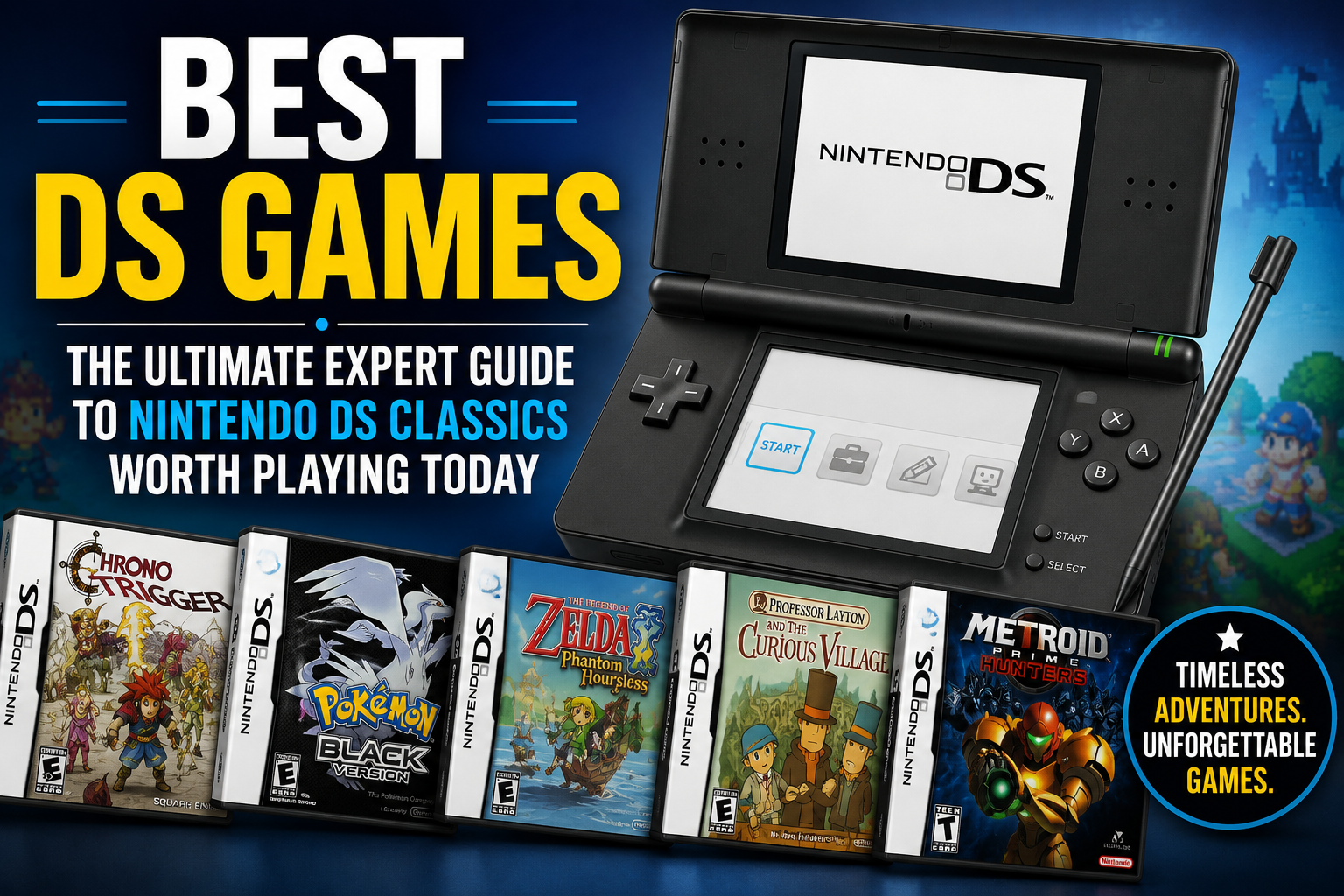
The Nintendo DS remains one of the most successful handheld gaming systems ever created. With its dual-screen design, touch controls, microphone functionality, and enormous software library, it introduced experiences that were impossible on previous handheld consoles. Years after its release, players still search for the best DS games because many of these titles remain unmatched in creativity, accessibility, and replay value.
Evaluating the best DS games requires more than looking at sales numbers or review scores. The strongest titles combine memorable gameplay, technical achievement, lasting influence, replayability, and the ability to remain enjoyable years later. Some games pushed the hardware in unexpected ways, while others refined established genres to near perfection.
This guide highlights the best DS games across multiple genres, including role-playing games, platformers, strategy titles, adventure experiences, and puzzle classics. Each selection earned its place through long-term impact, critical acclaim, player reception, and overall quality.
Mario Kart DS represented a turning point for handheld racing games. Nintendo managed to deliver a fast, polished, and content-rich experience that felt remarkably close to a console release. The inclusion of online multiplayer through Nintendo Wi-Fi Connection was groundbreaking at the time, allowing players worldwide to compete from a portable device.
The game’s track selection remains one of the strongest in the franchise. New courses such as Delfino Square and Airship Fortress blended perfectly with classic retro tracks from earlier Mario Kart entries. The controls were responsive, drifting felt rewarding, and item balance created countless memorable moments. One longtime competitive player famously described Mario Kart DS as “the game that made lunch breaks feel like esports tournaments.”
The strengths are obvious: excellent replay value, strong multiplayer, and accessible controls. The main weakness is that certain advanced techniques, particularly snaking, created a skill gap that some casual players found frustrating. Even so, its influence on future Mario Kart entries is undeniable.
Among the best DS games ever released, Pokémon HeartGold and SoulSilver occupy a special position. These remakes transformed the beloved Game Boy Color adventures into expansive modern experiences while preserving the spirit of the originals.
Players could explore both Johto and Kanto, effectively receiving two regions in a single game. The Pokéwalker accessory added real-world interaction long before mobile gaming popularized similar concepts. Every Pokémon could follow behind the player, creating a stronger emotional connection than many later entries.
The amount of content remains staggering. Gym battles, legendary hunts, battle facilities, mini-games, and post-game exploration provide hundreds of hours of entertainment. A common sentiment among Pokémon fans is that these games represent “the complete Pokémon package.”
Their only significant drawback is pacing during the middle portion of the adventure, where level progression can feel uneven. Despite this issue, they continue to rank among the best DS games for RPG enthusiasts and Pokémon fans alike.
Creating a handheld sequel to Wind Waker was an ambitious task, yet Phantom Hourglass succeeded by embracing the Nintendo DS hardware instead of simply adapting console mechanics.
Touchscreen controls became the centerpiece of exploration and combat. Players drew routes for ships, marked maps with notes, and solved puzzles that required creative interaction with the system itself. The game constantly encouraged experimentation.
Its ocean-based exploration delivered a genuine sense of discovery. The Temple of the Ocean King generated debate among players due to repeated visits, but it also introduced new shortcuts and mechanics that kept progression meaningful.
Strengths include inventive puzzle design, memorable dungeons, and excellent integration of DS features. The repeated dungeon structure may not appeal to everyone, yet the overall adventure remains one of Nintendo’s most distinctive handheld Zelda experiences.
Before New Super Mario Bros., traditional side-scrolling Mario games had been absent for years. This title successfully reintroduced the formula to a new generation while maintaining the core principles that made earlier entries legendary.
The game delivered precise controls, imaginative level design, hidden routes, and satisfying progression. New abilities such as the Mega Mushroom created moments of pure chaos and spectacle, while familiar power-ups preserved the classic Mario feel.
What made the experience special was its balance. Beginners could enjoy straightforward platforming while experienced players hunted for secret exits and collectible Star Coins. As one gaming journalist remarked during its release period, “Nintendo remembered that simplicity can still feel revolutionary.”
Its greatest strength lies in accessibility. The main criticism involves a somewhat conservative approach compared to later Mario titles. Even so, its importance to the franchise cannot be overstated.
Although originally released on the Super Nintendo, the Nintendo DS version of Chrono Trigger is widely regarded as the definitive edition. For many players, this release offered the ideal way to experience one of gaming’s greatest RPGs.
The story follows a group of heroes traveling across different eras to prevent planetary destruction. What sounds straightforward becomes a deeply emotional journey involving friendship, sacrifice, and destiny.
Combat remains remarkably engaging due to its active battle system and combination attacks. Multiple endings encourage replayability, while the pacing rarely slows. The DS version added quality-of-life improvements, additional content, and touchscreen functionality without compromising the original design.
Few weaknesses exist. Some additional content lacks the polish of the original adventure, but the core experience remains exceptional. For role-playing fans seeking the best DS games, Chrono Trigger belongs near the top of any list.
Animal Crossing: Wild World transformed everyday activities into a compelling long-term experience. Fishing, bug catching, fossil hunting, decorating homes, and interacting with quirky villagers created a world players wanted to revisit daily.
The portable nature of the DS enhanced the concept perfectly. Players could check their towns during short breaks, trade items with friends, and participate in seasonal events throughout the year.
The game excelled at creating personal stories. One player might spend weeks searching for rare furniture while another focused on town beautification. The freedom to set individual goals became a defining feature.
The presentation appears simple by modern standards, and some activities eventually become repetitive. Still, its relaxing gameplay loop remains surprisingly effective and continues to influence life simulation games today.
Dawn of Sorrow stands as one of the finest action-adventure titles on the Nintendo DS. Building upon the foundation established by its predecessor, it refined exploration, combat, and character progression.
The soul collection system encouraged experimentation with different abilities and playstyles. Players could combine offensive powers, movement skills, and support abilities to customize their approach to challenges.
The interconnected castle structure rewarded curiosity. Hidden rooms, optional bosses, and powerful equipment created a constant sense of progression. Many fans consider it one of the strongest entries in the entire Castlevania franchise.
Some touchscreen mechanics feel slightly forced compared to the rest of the game. Aside from that minor issue, Dawn of Sorrow remains an outstanding example of handheld action design.
Advance Wars: Dual Strike delivered deep tactical gameplay while remaining approachable for newcomers. Few strategy games manage this balance so effectively.
Players command military units across grid-based battlefields, making decisions involving positioning, resource management, and long-term planning. The introduction of dual commanding officers added fresh strategic possibilities and encouraged experimentation.
Campaign missions varied significantly, preventing gameplay from becoming repetitive. Every battlefield presented a unique puzzle requiring adaptation and foresight. According to one veteran strategy reviewer, “every victory feels earned rather than scripted.”
The game’s complexity can initially overwhelm inexperienced players, but those willing to invest time discover one of the most rewarding strategy experiences available on the DS.
Professor Layton and the Curious Village proved that puzzle games could deliver compelling storytelling alongside intellectual challenges. Its combination of mystery, charm, and brainteasers created a distinctive identity that helped launch a major franchise.
Players investigate a strange village while solving hundreds of puzzles integrated throughout the narrative. The artwork, soundtrack, and atmosphere contribute to a uniquely elegant presentation rarely seen in handheld gaming.
The variety of puzzles remains impressive. Logic challenges, mathematical riddles, pattern recognition tests, and visual brainteasers ensure constant variety. The game encourages thoughtful engagement rather than quick reflexes.
Some puzzles feel disconnected from the story context, which occasionally affects immersion. Nevertheless, the overall package remains one of the most memorable puzzle experiences on the platform.
Few role-playing games blend comedy and gameplay as effectively as Bowser’s Inside Story. The premise alone is unforgettable: Mario and Luigi operate from inside Bowser’s body while the iconic villain simultaneously embarks on his own adventure.
The dual perspective creates constant gameplay variety. Players alternate between controlling the brothers and controlling Bowser himself, each with unique mechanics and combat systems.
The writing remains consistently entertaining. Bowser steals nearly every scene through exaggerated confidence and surprisingly effective heroics. The turn-based battles reward timing and skill, making combat engaging from beginning to end.
A handful of mini-games may frustrate some players, but they are minor distractions within an otherwise exceptional RPG. Its creativity, humor, and gameplay quality secure its place among the best DS games ever released.
| Game | Genre | Best For | Replay Value | Difficulty Level |
|---|---|---|---|---|
| Mario Kart DS | Racing | Multiplayer competition | Very High | Medium |
| Pokémon HeartGold & SoulSilver | RPG | Long adventures | Extremely High | Medium |
| The Legend of Zelda: Phantom Hourglass | Adventure | Exploration and puzzles | High | Medium |
| New Super Mario Bros. | Platformer | Classic gameplay | High | Easy to Medium |
| Chrono Trigger | RPG | Story-driven experiences | Very High | Medium |
| Animal Crossing: Wild World | Life Simulation | Relaxed gaming sessions | Extremely High | Easy |
| Castlevania: Dawn of Sorrow | Action Adventure | Exploration and combat | High | Medium to Hard |
| Advance Wars: Dual Strike | Strategy | Tactical planning | Very High | Hard |
| Professor Layton and the Curious Village | Puzzle | Brain training | High | Medium |
| Mario & Luigi: Bowser’s Inside Story | RPG | Humor and character-driven storytelling | Very High | Medium |
The Nintendo DS library contains thousands of games, yet only a select group continues to attract players years after release. These titles stand apart because they combine strong design fundamentals with creative ideas that remain enjoyable today.
Another factor is platform-specific innovation. Many of the best DS games were designed around touchscreen interaction, dual-screen functionality, and portable play sessions rather than simply adapting existing formulas.
Most importantly, these games continue to inspire modern developers. Features first introduced or refined on the DS can still be found in contemporary releases across multiple platforms.
The Nintendo DS offered one of the strongest software libraries in gaming history. Whether players preferred racing, role-playing adventures, strategy battles, puzzle solving, platforming, or life simulation, the system provided standout experiences that remain relevant years later.
Mario Kart DS set a standard for handheld multiplayer. Pokémon HeartGold and SoulSilver delivered extraordinary value. Chrono Trigger showcased timeless storytelling. Advance Wars: Dual Strike demonstrated strategic depth, while Professor Layton introduced a unique blend of puzzles and narrative.
Together, these selections represent the very best of what the platform achieved. Anyone exploring the best DS games today will find experiences that still compete with modern releases in terms of creativity, design quality, and pure enjoyment.
Many players and critics place Pokémon HeartGold and SoulSilver at the top because of their massive content offerings, polished gameplay systems, and ability to include two complete regions. Chrono Trigger and Mario Kart DS are also frequent contenders for the title of best DS game overall.
Yes. Many of the best DS games remain highly enjoyable because strong game design ages better than graphical technology. Titles such as Chrono Trigger, Mario Kart DS, and Bowser’s Inside Story continue to provide engaging experiences decades after release.
Pokémon HeartGold and SoulSilver generally offer the longest playtime. Completing the main story, exploring both regions, collecting Pokémon, and participating in post-game activities can easily exceed one hundred hours.
New Super Mario Bros. is an excellent starting point. Its straightforward controls, gradual difficulty progression, and familiar gameplay make it accessible to players with little gaming experience.
Mario Kart DS remains one of the strongest multiplayer titles on the system. Local races with friends are fast, competitive, and endlessly replayable. Animal Crossing: Wild World also provides enjoyable social interaction through town visits and item trading.
Absolutely. The Nintendo DS became a major platform for role-playing games. Chrono Trigger, Pokémon HeartGold and SoulSilver, and Mario & Luigi: Bowser’s Inside Story demonstrate why many RPG fans consider the DS one of the greatest handheld systems ever created.
Collectors value these games because of their historical significance, gameplay quality, and lasting influence on the industry. Many of the best DS games also had limited production runs, making physical copies increasingly desirable among enthusiasts.