
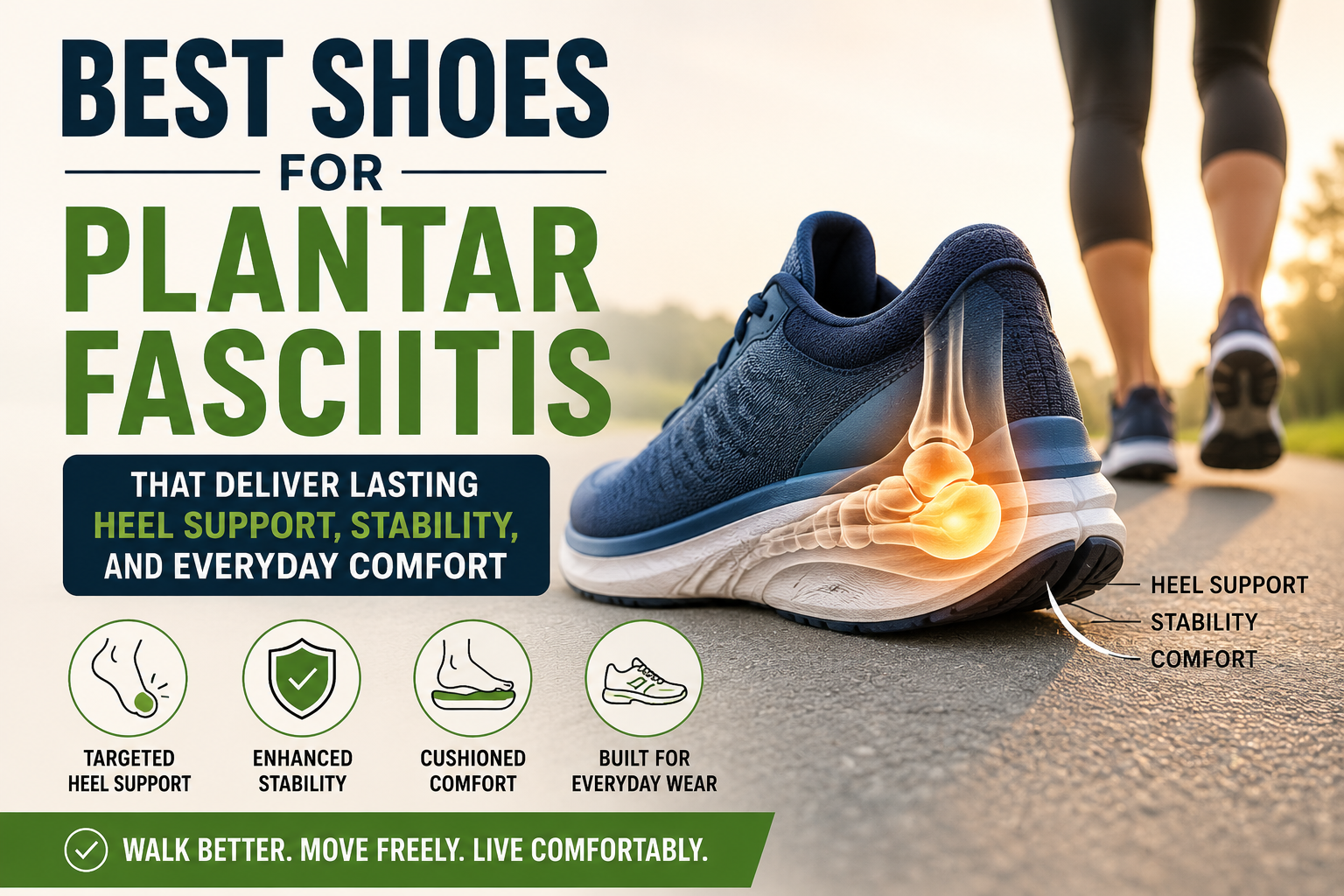
Best Shoes For Plantar Fasciitis That Deliver Lasting Heel Support, Stability, And Everyday Comfort
Plantar fasciitis can turn simple daily movement into a constant battle with heel pain, arch strain, and stiffness that feels worst first thing in the morning. The right footwear changes that experience dramatically. Supportive midsoles, stable heel structures, responsive cushioning, and proper arch geometry all play a major role in reducing stress on the plantar fascia.
The best shoes for plantar fasciitis are not simply soft shoes. Excessively soft footwear often collapses under pressure and forces the foot to work harder. Effective plantar fasciitis shoes balance cushioning with structure. They absorb impact while guiding the foot through a stable stride pattern. After reviewing biomechanical performance, long-term wear feedback, podiatry recommendations, outsole durability, and comfort across different walking styles, these ten models consistently stand out.
The selections below cover walking, running, standing all day at work, gym training, travel, and everyday casual use. Some excel in maximum cushioning, while others focus on motion control and arch stabilization. That distinction matters because plantar fasciitis affects people differently depending on gait, body weight, activity level, and foot shape.
| Shoe Model | Best Use Case | Cushioning Level | Arch Support | Weight Feel | Best For |
|---|---|---|---|---|---|
| HOKA Bondi 8 | Long-distance walking | Maximum | High | Moderate | Heel pain relief |
| Brooks Adrenaline GTS 24 | Stability running | Medium-High | High | Balanced | Overpronation |
| ASICS Gel-Kayano 31 | Daily running and standing | High | High | Moderate | Flat feet |
| New Balance Fresh Foam X 1080v14 | All-day comfort | Plush | Medium | Lightweight | Sensitive heels |
| Orthofeet Coral Stretch Knit | Medical-grade comfort | Medium | Very High | Light | Severe plantar pain |
| Saucony Guide 18 | Walking and light running | Medium | High | Light | Stability seekers |
| OOFOS OOmg Sport | Recovery wear | Soft | Medium | Very Light | Post-workout recovery |
| Nike Structure 26 | Athletic versatility | Medium-High | Medium-High | Responsive | Active lifestyles |
| Vionic Walker Classic | Everyday walking | Firm-Medium | Very High | Moderate | Orthotic-style support |
| Altra Paradigm 8 | Natural foot positioning | High | Medium-High | Moderate | Wide toe comfort |
HOKA Bondi 8: Maximum Cushioning That Reduces Heel Impact Exceptionally Well
The HOKA Bondi 8 has become one of the most recommended models among podiatrists for persistent heel pain because it combines thick cushioning with surprising stability. Many heavily cushioned shoes feel unstable, but the Bondi 8 uses a wide base and rear crash pad to soften heel strikes without creating wobble. That balance is why so many people searching for the best shoes for plantar fasciitis end up wearing this model for work shifts, travel, and recovery walks.
The rocker-shaped sole deserves special attention. Instead of forcing the plantar fascia to flex aggressively during toe-off, the shoe helps roll the foot forward naturally. “The rolling transition reduces strain under the arch more than people expect,” explained sports podiatrist Dr. Evan Richards during a footwear clinic discussion. The downside is its bulky appearance and stack height, which can feel oversized for users accustomed to minimalist footwear. Still, for severe heel pain and long standing hours, few shoes absorb repetitive impact as effectively.
Brooks Adrenaline GTS 24: Stability Support That Controls Excessive Foot Motion
Overpronation remains one of the biggest aggravators of plantar fascia strain, and the Brooks Adrenaline GTS 24 addresses that issue extremely well. The GuideRails support system stabilizes the foot without creating the rigid sensation associated with older motion-control shoes. That modern stability design makes it one of the best shoes for plantar fasciitis for runners and walkers who need corrective support but still want flexibility.
The cushioning strikes a practical middle ground. It feels softer than traditional stability shoes yet firm enough to prevent collapse through the arch. Many users describe the Adrenaline line as dependable rather than flashy. That reputation matters because plantar fasciitis often responds better to consistency than novelty. The main limitation is that people wanting ultra-soft cushioning may prefer the HOKA Bondi or New Balance 1080 instead. Even so, the Adrenaline excels for moderate daily mileage and extended standing sessions.
ASICS Gel-Kayano 31: Reliable Arch Structure For Flat Feet And Chronic Heel Pain
The ASICS Gel-Kayano series has spent years evolving from a rigid stability shoe into something smoother and more adaptable. The latest version keeps strong arch guidance while adding softer foam that feels more forgiving during longer wear periods. For people with flat feet, the Kayano remains one of the best shoes for plantar fasciitis because it prevents inward rolling that repeatedly stresses the fascia.
Its heel counter is especially effective. Heel instability often increases inflammation through repeated micro-movements during walking. The Kayano locks the rear foot in place without causing harsh rubbing around the Achilles area. Physical therapist Lauren Meyers once summarized the model perfectly: “Supportive shoes should guide movement, not punish it.” That philosophy shows here. The shoe is slightly heavier than neutral trainers, though most users accept that tradeoff because of the added structure and long-term comfort.
New Balance Fresh Foam X 1080v14: Plush Comfort For Sensitive Feet And Daily Wear
The Fresh Foam X 1080v14 works exceptionally well for people who want softness without completely sacrificing support. Many highly cushioned shoes flatten too quickly under heavier body weight, but New Balance designed this foam to maintain responsiveness over time. That durability helps explain why the model frequently appears in discussions about the best shoes for plantar fasciitis.
One standout feature is the roomy forefoot. Tight toe boxes force unnatural gait compensation that can increase plantar strain. The 1080v14 allows natural toe spread while still securing the midfoot properly. The shoe feels smooth during casual walking, treadmill sessions, and travel days involving hours of standing. The weakness lies in aggressive stability control. Severe overpronators may need a more structured option like the Kayano or Adrenaline. For neutral walkers with heel sensitivity, however, this shoe offers impressive comfort.
Orthofeet Coral Stretch Knit: Medical-Focused Comfort For Persistent Foot Conditions
Orthofeet built its reputation around orthopedic comfort rather than athletic performance, and the Coral Stretch Knit reflects that priority clearly. This shoe is designed specifically for people managing chronic foot pain conditions, including plantar fasciitis, neuropathy, and arthritis. Unlike mainstream athletic shoes that adapt performance technology for pain relief, Orthofeet starts with pain reduction as the primary mission.
The removable orthotic insole and deep heel cup provide outstanding pressure distribution. Many users who struggle with rigid footwear appreciate the stretch-knit upper because it reduces friction around sensitive areas. “This feels closer to therapeutic footwear without looking clinical,” noted one long-term wearer in a podiatry review panel. The athletic responsiveness is limited compared to performance running shoes, so serious runners may not find it dynamic enough. Still, for everyday pain management, it remains among the best shoes for plantar fasciitis available today.
Saucony Guide 18: Balanced Stability Without Excessive Firmness
Some stability shoes feel corrective in an uncomfortable way, almost forcing the foot into unnatural alignment. The Saucony Guide 18 avoids that problem by offering subtle support paired with flexible cushioning. This makes it especially useful for people with mild to moderate plantar fasciitis who still want a shoe that feels agile during daily movement.
The shoe transitions smoothly during walking because the midsole geometry encourages forward motion without abrupt stiffness. Saucony’s cushioning formula also keeps impact feeling controlled rather than mushy. That distinction matters because unstable softness can worsen heel fatigue over time. The Guide 18 may not provide enough support for severe biomechanical issues, but it performs extremely well as an all-purpose option for work, fitness walking, and light jogging.
OOFOS OOmg Sport: Recovery Footwear That Minimizes Foot Fatigue
Recovery shoes occupy a different category than traditional trainers, but they deserve attention because plantar fasciitis often worsens during post-activity recovery periods. The OOFOS OOmg Sport uses proprietary foam that absorbs impact at a noticeably higher level than standard EVA midsoles. Many users immediately notice reduced heel pressure while wearing them indoors or after exercise.
The shoe’s rocker design helps reduce strain through the arch during walking. Recovery footwear is often dismissed as overly soft, yet OOFOS manages to maintain enough structure for short outdoor use. These are not ideal for intense workouts or long-distance walking, though. Instead, they excel as secondary footwear for reducing cumulative stress throughout the day. For athletes managing recurring heel inflammation, they can be a surprisingly valuable addition.
Nike Structure 26: Athletic Performance With Dependable Heel Stability
Nike shoes historically prioritized speed and style more than orthopedic support, but the Structure line has matured into a highly capable stability trainer. The Nike Structure 26 delivers firmer medial support and better heel containment than many previous Nike running models, making it a strong contender among the best shoes for plantar fasciitis for active users.
The cushioning feels energetic rather than pillowy. Some people prefer that responsive sensation because ultra-soft shoes can feel tiring during faster walking or gym workouts. The Structure 26 performs especially well for people transitioning between training sessions and everyday wear. One compromise is the narrower fit compared to brands like New Balance or Altra. Users with wide feet may need to size carefully or explore wider alternatives.
Vionic Walker Classic: Orthotic-Level Support For Daily Walking And Work
The Vionic Walker Classic remains popular because it approaches support from an orthotic perspective. The arch contour is noticeably pronounced, which immediately relieves strain for some users while requiring a short adjustment period for others. People who spend entire workdays walking on concrete floors often describe significant reductions in heel soreness after switching to this shoe.
Durability is another advantage. Many lightweight walking shoes compress rapidly under continuous use, but the Walker Classic maintains structure well over time. Podiatric consultant Rachel Greene once remarked, “A shoe that loses support after three months becomes part of the problem.” That long-term stability gives the Vionic model real value. The design is more practical than fashionable, though comfort-focused buyers often prioritize function over aesthetics when dealing with chronic plantar pain.
Altra Paradigm 8: Natural Foot Alignment With A Spacious Toe Box
The Altra Paradigm 8 approaches plantar fasciitis differently than most shoes on this list. Instead of relying on aggressive arch structures, it promotes natural alignment through a wide toe box and balanced platform. Many users experience relief because the shoe allows the forefoot to spread naturally, reducing tension patterns that can contribute to fascia irritation.
The zero-drop-inspired geometry requires some adjustment for users coming from heavily elevated heels. Still, the Paradigm includes enough cushioning and guidance support to feel safer than traditional minimalist shoes. This model works especially well for walkers who dislike restrictive footwear and want a more natural stride experience. Transitioning too quickly can stress the calves initially, so gradual adaptation is recommended for maximum comfort and injury prevention.
How To Choose The Best Shoes For Plantar Fasciitis
The best shoes for plantar fasciitis share several important characteristics beyond simple softness. Arch support matters because it helps distribute pressure more evenly across the foot instead of concentrating strain at the heel attachment point. Heel cushioning also plays a major role by reducing repetitive impact during walking and standing.
Stability should never be overlooked. Excessive inward rolling increases tension through the plantar fascia with every step. Shoes with structured midsoles and stable heel counters often outperform overly flexible footwear for long-term pain management. Fit is equally important. A cramped toe box changes gait mechanics, while a loose heel allows unnecessary motion that aggravates inflammation.
People with severe symptoms usually benefit from replacing worn footwear earlier than average users. Even premium midsoles lose shock absorption over time. Many podiatrists recommend monitoring outsole wear patterns and replacing supportive shoes before cushioning visibly collapses.
Why Plantar Fasciitis Gets Worse With Poor Footwear
Flat unsupportive shoes place continuous stress on the connective tissue running along the bottom of the foot. Thin soles fail to absorb impact, forcing the plantar fascia to manage repetitive shock directly. That stress accumulates gradually until inflammation becomes persistent.
Unsupportive slippers and worn-out sneakers are common hidden contributors. Many people wear excellent athletic shoes outdoors but switch to completely flat indoor footwear at home, where plantar fascia stress continues for hours. Recovery periods matter just as much as active movement.
Shoes lacking torsional stability also create problems. Excess twisting through the midfoot increases strain during walking transitions. Supportive footwear reduces that instability and allows the foot to move more efficiently throughout the gait cycle.
Final Thoughts On Finding The Best Shoes For Plantar Fasciitis
The best shoes for plantar fasciitis are the ones that match both foot mechanics and daily activity demands. Maximum cushioning helps many users, but structure and stability often matter just as much as softness. A shoe that feels comfortable during a five-minute fitting can still become problematic after eight hours of standing if support breaks down under load.
The HOKA Bondi 8 remains one of the strongest overall choices for severe heel pain because of its exceptional impact absorption and smooth rocker transition. The Brooks Adrenaline GTS 24 and ASICS Gel-Kayano 31 excel for stability needs, while the New Balance 1080v14 offers impressive comfort for neutral walkers. Orthofeet and Vionic deliver more therapeutic support, and Altra provides a natural-foot alternative for users who dislike restrictive designs.
Footwear alone does not solve every case of plantar fasciitis, but supportive shoes consistently reduce stress, improve walking mechanics, and create a more manageable recovery environment. That combination makes proper footwear one of the most effective long-term investments for chronic heel pain relief.
What features matter most in the best shoes for plantar fasciitis?
Arch support, heel cushioning, midsole stability, and a supportive heel counter are the most important features. Shoes that combine shock absorption with structural support typically perform better than overly soft shoes that compress too easily.
Are running shoes good for plantar fasciitis even if walking is the main activity?
Many running shoes work extremely well for walking because they are engineered for repetitive impact protection. Models like the Brooks Adrenaline GTS 24 and ASICS Gel-Kayano 31 provide cushioning and stability that benefit both runners and everyday walkers.
How often should plantar fasciitis shoes be replaced?
Most supportive shoes lose effectiveness after roughly 300 to 500 miles of use, though standing-heavy jobs can shorten lifespan significantly. Visible outsole wear, compressed midsoles, and reduced comfort are signs that replacement is needed.
Can flat shoes make plantar fasciitis worse?
Flat unsupportive footwear often increases strain on the plantar fascia because it lacks arch support and impact absorption. Minimal cushioning combined with poor stability can aggravate heel pain over time.
Are expensive shoes always better for plantar fasciitis?
Higher price does not automatically mean better support. Some premium shoes focus more on lightweight performance than foot stability. The best shoes for plantar fasciitis are the ones that properly support gait mechanics and reduce repetitive heel stress.
Do orthotics help when combined with supportive shoes?
Custom or over-the-counter orthotics can improve alignment and pressure distribution, especially for people with severe overpronation or unusually high arches. Many of the best shoes for plantar fasciitis also include removable insoles to accommodate orthotics comfortably.
Is maximum cushioning always the best option for heel pain?
Not always. Excessively soft shoes can become unstable and increase foot fatigue. Effective plantar fasciitis footwear balances cushioning with controlled support so the foot stays aligned throughout movement.
Mariam Nazir
Mariam Nazir founded Top 10 with a straightforward goal: create a website where people can find genuinely helpful, well-researched top 10 lists on the topics they actually care about.