
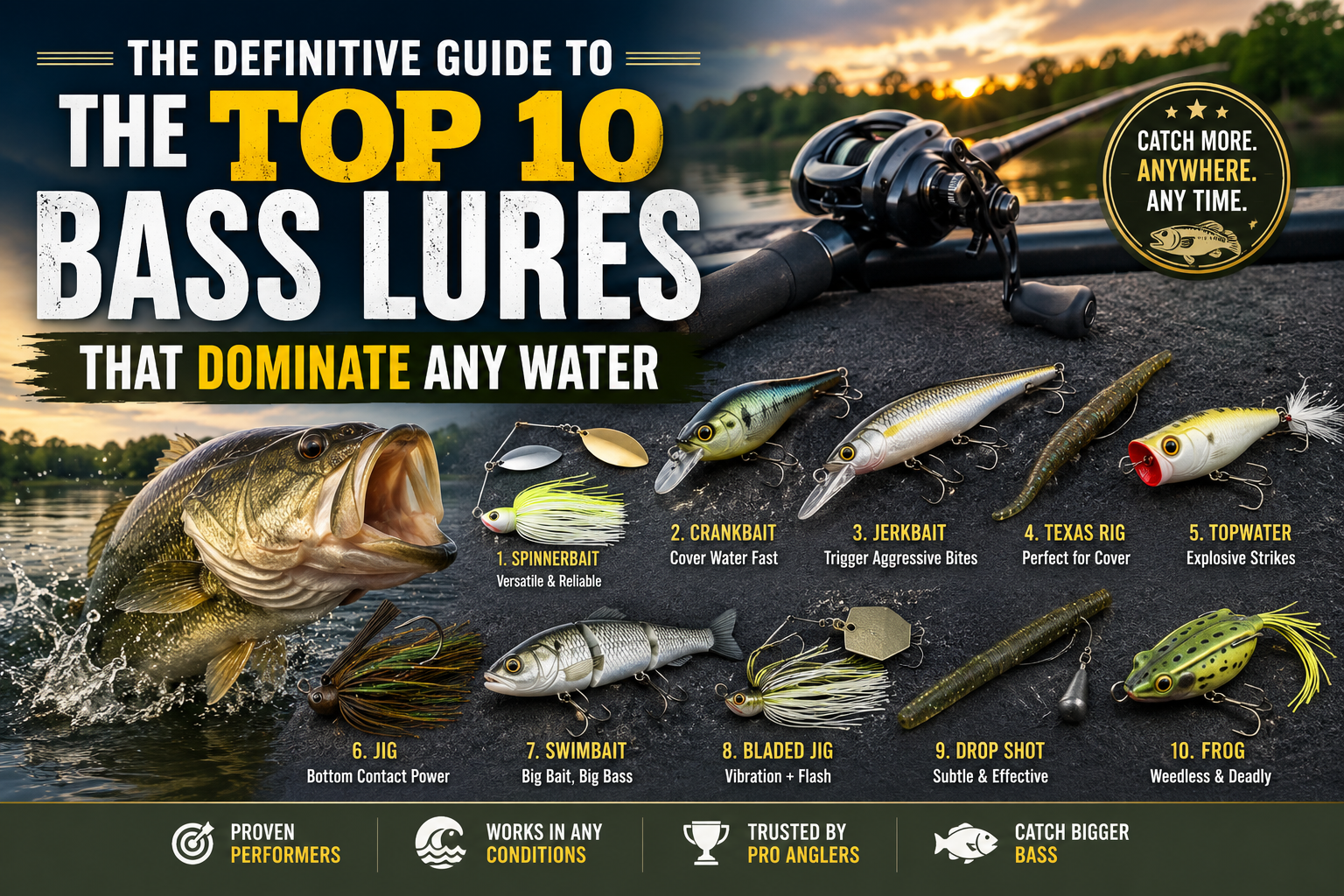
The Definitive Guide to the Top 10 Bass Lures That Dominate Any Water
Every angler knows that feeling—staring into a tackle box packed with plastic and metal, wondering which one will finally trigger a strike. The reality is that bass are moody creatures, and their preferences change with the weather, water clarity, and even the time of day. Having the right bait for the right situation is the difference between a skunk and a story. This guide isn’t about ranking baits based on flashy packaging. It is a breakdown of proven performers, selected based on years of on-the-water experience, versatility, and the ability to produce fish when the pressure is on. We analyzed action, durability, hook-up ratios, and specific scenarios where each lure shines to bring you a curated selection of the best tools for the job.
The Texas Rigged Plastic Worm: The Ultimate Finesse Weapon
If there is one bait that has caught more big bass than any other, it is the Texas rigged worm. Its genius lies in its simplicity. By rigging a soft plastic worm with a bullet weight pegged above the nose, the angler creates a presentation that slips through heavy cover like a snake through grass. The action is subtle; a slight twitch of the rod tip makes the tail quiver, enticing even the most lethargic bass hiding in submerged timber or thick pads. It is the go-to when the bite gets tough, proving that sometimes the best approach is the quietest. “When the fish are locked on deep structure and won’t chase a fast-moving bait, I rarely throw anything but a Texas rig,” says veteran tournament angler Mike Iaconelli. The ability to fish it weightless, with a light sinker, or punch it through dense matting makes it an indispensable part of the top 10 bass lures arsenal.
The primary strength of this setup is its weedlessness. The hook point is buried back into the worm, allowing it to glide through the nastiest laydowns without snagging. However, this advantage comes with a trade-off. The buried hook point requires a solid, firm hookset to penetrate the plastic and the bass’s jaw, which means you often lose the fish if you are not paying attention. It is best suited for anglers who prefer a methodical, slow-paced retrieve, feeling every rock and limb on the bottom. While it might lack the flash of a spinnerbait, the Texas rig consistently puts fish in the boat, especially during the post-spawn and summer months when bass seek refuge in heavy cover.
The Squarebill Crankbait: The Deflection Master
There is something primal about the reaction strike triggered by a squarebill crankbait. These hard-bodied lures are designed with a square, flat bill that causes them to deflect violently off rocks, stumps, and dock pilings. This erratic, bouncing motion mimics a fleeing baitfish that is injured and confused—an easy meal for a predatory bass. The tight wobble and compact profile make them exceptional in shallow water, usually ranging from two to six feet deep, where they can be banged into cover to draw the fish out of hiding. They are incredibly effective in the spring and fall when bass are feeding aggressively in the shallows to fatten up.
The selection of a squarebill often comes down to buoyancy. Most are floating, meaning they will rise and suspend when paused, giving the angler a momentary break from the snags that plague rocky bottoms. The biggest drawback is their limited depth range. If the fish are suspended deeper than ten feet, a squarebill is practically useless. Additionally, the treble hooks, while great for hooking fish, are notorious for snagging on heavy timber. Despite these limitations, for sheer excitement and the ability to provoke a vicious, “reaction” strike, the squarebill is a must-have for any shallow water specialist looking to round out their collection of top 10 bass lures.
The Chatterbait (Vibrating Jig): The Heavyweight Champion
The chatterbait, or vibrating jig, has revolutionized the fishing world with its unique blade design that creates a powerful thump and vibration even at slow speeds. Unlike a spinnerbait that rotates around a wire arm, the chatterbait’s blade swings side-to-side, displacing water and emitting a low-frequency sound wave that lateral lines can feel from a distance. This makes it a phenomenal choice in murky water or windy conditions where visibility is low. The vibration is so intense that it often triggers a “reflex bite” from inactive fish that wouldn’t normally chase a traditional lure.
This bait excels when paired with a soft plastic trailer, like a craw or paddle tail, which adds bulk and changes the action. It can be burned across the surface, yo-yoed off the bottom, or crawled slowly through grass. The main issue anglers face is blade alignment; if the wire eyelet gets bent, the action is ruined. It also tends to pick up grass and debris faster than other options. However, for triggering big, aggressive fish in the heat of the summer, the chatterbait remains one of the most effective tools in the box, securing its place in the discussion of the top 10 bass lures.
The Ultimate Guide to the Top 10 Alkaline Foods for Optimal Health and Vitality
The Jig and Craw Combo: The Power Presentation
When you need to sort the big fish from the school, the jig and craw combination is the ultimate power fishing tool. This is not a finesse bait; it is a heavy, bulky presentation designed to target trophy-sized bass holding tight to deep structure. The combo consists of a lead-head jig with a weed guard and a rubber skirt, tipped with a plastic crawfish trailer. The claws of the craw kick and flutter as the bait is hopped along the bottom, creating a tempting silhouette that mimics a bass’s favorite meal. It is a bottom-contact bait that requires intense concentration to feel the subtle “tick” of a bite.
Fishing a jig is all about feel. It is best used on hard bottoms, rocky points, and channel ledges where crawfish are abundant. The heavy weight allows for instant bottom contact and better sensitivity. Conversely, its weight can be a detriment in sparse cover where a lighter drop might be more natural. It also requires a more specialized rod and reel setup to handle the weight and drive the hook home through the bulky plastic and thick wire hook. Despite the steep learning curve, mastering this presentation is often the key to winning tournaments and consistently catching larger fish.
The Topwater Popper: The Visual Thrill
No other lure induces an adrenaline rush quite like a topwater popper. Watching a bass erupt on a surface lure is the pinnacle of bass fishing, a visual spectacle that keeps anglers coming back for more. The popper’s concave face creates a distinct “bloop” or “pop” sound when jerked, imitating a struggling insect or baitfish trapped on the surface. This commotion draws aggressive bass up from the depths, often triggering explosive strikes that seem more violent than the actual size of the bait suggests.
These lures are most effective in low-light conditions—dawn, dusk, and overcast days—when bass are more willing to come to the surface. They also work exceptionally well in calm, flat water where the ripples can be seen for miles. The primary weakness is the high number of missed strikes; bass often miss the hooks or slap at the bait with their tails. Anglers must be disciplined and wait a second to feel the weight of the fish before setting the hook. While weather-dependent, the sheer thrill of the topwater bite makes it an unforgettable addition to any list of top 10 bass lures.
The Lipless Crankbait: The Search Bait
The lipless crankbait is the ultimate search tool for covering vast amounts of water quickly. Its name is derived from the fact that it lacks a diving lip, which causes it to sink and allows for a straight, tight wobble that is highly visible and audible. The tight vibration is particularly effective in deeper water and grass flats where a squarebill cannot reach. By counting down the sink rate, an angler can precisely determine the depth the lure is running, making it incredibly versatile for targeting suspended fish or fish hugging the bottom.
These lures are incredibly simple to use; a steady retrieve is usually the best approach, often punctuated by a “stop-and-go” motion to trigger reaction bites. They are also known for their “ripping” technique, where the angler jerks the rod to rip the bait free from grass, causing it to dart erratically. The downside is that they are heavy and can be tiring to throw all day. They are also prone to getting snagged in rocky areas due to the exposed treble hooks. However, as a scouting tool to locate active fish, the lipless crankbait is unmatched.
The Spinnerbait: The Versatile Workhorse
The spinnerbait is one of the most versatile lures ever created. Its design features a wire frame with one or more metal blades that spin around the arm, creating flash and vibration. This makes it highly visible in stained or murky water. It can be fished at virtually any speed, from a slow roll along the bottom to a fast burn just below the surface, making it a year-round producer. The unique design also makes it extremely weedless, as the wire arm acts as a guard against snags, allowing it to be fished through heavy cover where other baits would hang up.
Its strength is its adaptability. You can change the blade size and color (Colorado for vibration, Willow for flash) to match the conditions. The spinnerbait is often credited with catching huge numbers of fish, though not always the biggest. Many anglers consider it a “numbers” bait. It can be heavy to cast, and the blades can sometimes tangle on the cast if not thrown correctly. Still, if you are heading to a new lake and don’t know what to throw, the spinnerbait is a safe bet and a definitive member of the top 10 bass lures.
The Jerkbait (Hard Jerkbait): The Cold Water King
When the water temperature drops into the 40s and 50s, bass metabolism slows down. They are less likely to chase a fast-moving lure, but they will strike a bait that appears wounded and easy to catch. This is where the jerkbait shines. These slender, hard minnow-shaped baits are designed to be “jerked” or twitched with the rod tip, then paused for a long period. This action causes the lure to dart side-to-side and suspend in the water column, perfectly mimicking a dying shad.
The key to this lure is the pause. Often, bass will follow the bait and only strike when it is completely stationary. It takes a lot of practice to master the “jerk-pause-jerk” rhythm effectively. The treble hooks are sharp but small, which can sometimes struggle to penetrate the tough mouths of larger bass. This bait is very much a seasonal tool; it is far less effective in warm water when bass are more active and aggressive. However, for winter fishing and early spring prespawn giants, the jerkbait is an absolute necessity for the serious angler.
The Swimbait (Paddle Tail): The Realistic Imitator
Modern swimbaits, specifically the paddle tail variety, have become a staple for targeting big bass. Made from soft, flexible plastic, the paddle tail creates a subtle, rolling motion that closely resembles a real baitfish. These baits are incredibly versatile and can be rigged on a jig head for bottom hopping, a weighted swimbait hook for weedless presentations, or even as a trailer on a chatterbait. The slow, steady retrieve is easy to maintain and often triggers strikes from fish that are looking for a large, easy meal.
They are particularly effective in clear water where bass can get a good look at their prey. The life-like profile and movement often persuade wary fish to commit when they would ignore other lures. The main downside is that they are often larger and heavier, requiring a specific rod to cast effectively. They also have a tendency to get torn up by pike or pickerel. Nonetheless, the swimbait’s ability to catch a trophy fish on any given cast makes it an essential part of the top 10 bass lures list.
The Finesse Drop Shot Rig: The Depth Finder
The drop shot rig is the ultimate deep-water finesse technique. Originating in the clear waters of the west coast, it has spread nationwide as a deadly method for catching finicky bass holding in deep water or suspended off ledges. The rig is unique because the hook is tied above the weight, allowing the bait to flutter and twitch naturally in the strike zone while the weight sits on the bottom. This presentation keeps the bait in the face of the bass for an extended period.
It is best used in clear water and on structure like humps, points, and channels. The high visibility allows the angler to see the line move or feel the slightest tick. It is a highly effective finesse method, but it is slow. You are not covering water, you are finessing fish. It requires a sensitive rod and light line, which means you can lose a big fish if you are not careful. Despite the slow pace, when the fish are deep, pressured, and lock-jawed, the drop shot is often the only bait that will produce a bite, securing its place in the expert tier.
Comprehensive Comparison of the Top 10 Bass Lures
| Lure Type | Best Water Depth | Best Water Clarity | Best Season | Primary Technique | Hook Type |
|---|---|---|---|---|---|
| Texas Rigged Worm | 0-20+ ft | Stained to Murky | Post-Spawn / Summer | Bottom Hop / Slow Drag | Single (Offset) |
| Squarebill Crankbait | 1-6 ft | Clear to Stained | Spring / Fall | Deflect off Cover | Treble |
| Chatterbait | 0-10 ft | Murky / Windy | Summer / Fall | Steady Retrieve / Yo-Yo | Single (Jig) |
| Jig and Craw | 5-20+ ft | All | Year-Round | Bottom Hop / Pitchin’ | Single (Heavy) |
| Topwater Popper | Surface | Calm / Clear | Dawn / Dusk | Pop / Pause | Treble |
| Lipless Crankbait | 2-15 ft | Stained | Spring / Fall | Steady / Ripping | Treble |
| Spinnerbait | 0-15 ft | Stained / Murky | Year-Round | Steady / Slow Roll | Single (Jig) |
| Jerkbait | 3-10 ft | Clear | Winter / Early Spring | Jerk / Pause | Treble |
| Swimbait | 0-15 ft | Clear | Summer | Steady Retrieve | Single (Jig) |
| Drop Shot Rig | 10-40+ ft | Clear | Summer / Winter | Dead-Stick / Shake | Single (Finesse) |
When selecting bait, it’s all about context. No single lure works every day, but by understanding the strengths and weaknesses of these top 10 bass lures, you can start building a game plan before you even hit the water. Most anglers might reach for the flashiest option, but experience teaches you that the right bait is the one that matches the depth, cover, and mood of the fish. The bass fishing world is constantly evolving, but these designs have stood the test of time because they produce results. Whether you are pitching a jig into a thicket or cranking a squarebill off a rock, you are using a proven system that relies on your skill to convert strikes into fish in the boat.
Frequently Asked Questions About Bass Lures
What is the single best all-around bass lure for beginners?
The spinnerbait is widely considered the best starting point. Its versatility allows it to be fished at various depths and speeds, and its design is relatively snag-proof. It allows new anglers to cover water effectively while learning to feel the difference between a bite and a rock.
How do I choose the right color for my bass lures?
Color selection is often dictated by water clarity. In clear water, natural hues like shad, green pumpkin, and watermelon excel. In murky or stained water, chartreuse, black/blue, and bright orange create a better silhouette. Also, consider matching the local forage, such as bluegill or crayfish.
How often should I replace the hooks on my top 10 bass lures?
You should replace hooks immediately if they feel dull to the touch or show signs of rust. A sharp hook is critical; many anglers replace the treble hooks on crankbaits with premium, extra-sharp hooks right out of the box to improve the hook-up ratio.
Can I use these lures in saltwater?
While some lures like the Texas rig and swimbaits can be used in saltwater, the hooks and hardware are not designed for the corrosive salt environment. If you use them in saltwater, rinse them thoroughly with fresh water immediately after use to prevent rust.
Why do bass follow my lure to the boat without biting?
This is a classic sign of a “follower.” It often happens with jerkbaits and swimbaits. The fish is curious but not committed. To trigger a strike, change your retrieve speed abruptly, often by killing the action and letting the bait drop, which causes the bass to react aggressively.
What is the best time of year to throw a topwater bait?
Topwater baits are most effective during the spring and fall when bass are feeding aggressively in the shallows, and during the summer at dawn and dusk. They are also excellent on overcast days when bass feel secure moving up to the surface.
Mariam Nazir
Mariam Nazir founded Top 10 with a straightforward goal: create a website where people can find genuinely helpful, well-researched top 10 lists on the topics they actually care about.