
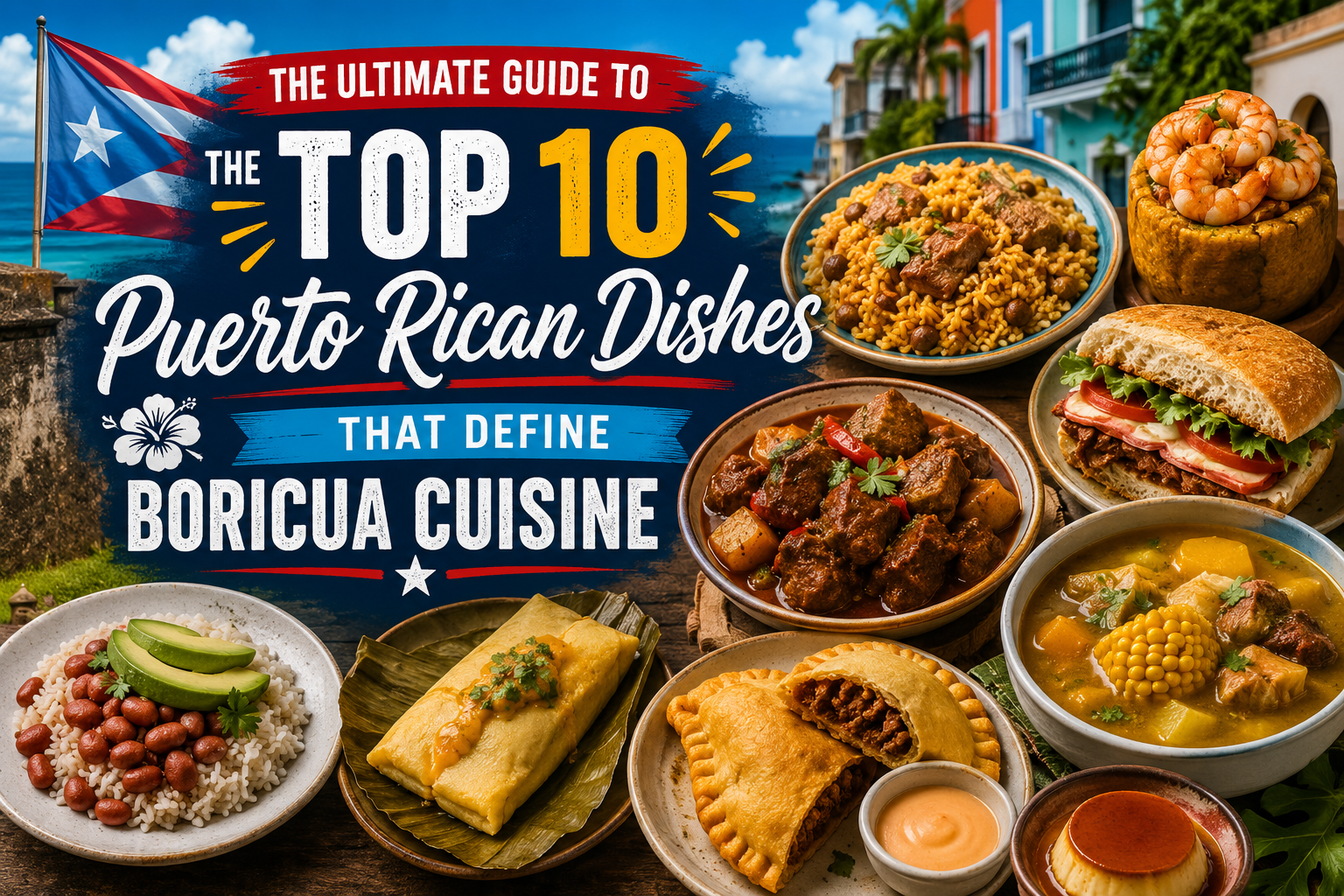
The Ultimate Guide to the Top 10 Puerto Rican Dishes That Define Boricua Cuisine
Puerto Rican food is a living history book, a vibrant tapestry of Taíno, Spanish, and African influences that have simmered together over centuries to create something wholly unique. It’s not just about eating; it’s about community, celebration, and the daily rhythm of life on the island. If you are looking to understand Puerto Rican culture, your journey absolutely has to start in the kitchen. This guide breaks down the top 10 Puerto Rican dishes you absolutely need to know. The selections were made based on cultural significance, historical roots, frequency of preparation across the island, and overall impact on the diaspora. We’re looking at the staples that appear at every family gathering, the street foods that define neighborhoods, and the complex stews that showcase the depth of Puerto Rican culinary technique. Whether you are planning a trip to San Juan or simply want to cook something authentic in your own kitchen, this list is your definitive starting point for the top 10 Puerto Rican dishes.
Mofongo: The Mashed Plantain Powerhouse of Puerto Rican Cuisine
If there is one dish that contends for the top spot among the top 10 Puerto Rican dishes, it is undoubtedly mofongo. This iconic creation begins with green plantains, which are peeled, cut into chunks, and fried until golden. They are then mashed in a wooden mortar, or pilón, with garlic, olive oil, and crispy bits of pork rind known as chicharrones. The result is a dense, starchy, and incredibly flavorful mass that serves as both a side and a main course. The magic of mofongo lies in its texture—it should be crispy on the outside from the fried plantains but soft and cohesive inside. Typically, it is molded into a dome shape and served with a rich broth or caldo made from chicken or shrimp, which you pour over the top to moisten the mash. For the uninitiated, this might just seem like mashed plantains, but the garlic and pork fat elevate it to a completely different level.
Who is this for? Honestly, everyone. However, it is best for those who appreciate bold, savory flavors and hearty textures. It is the ultimate comfort food for a rainy afternoon. A seasoned chef from Santurce once described it perfectly: “Mofongo is the anchor of our table. You can dress it up with seafood, or keep it simple with just the pork. But if you crush it with your own hands in the pilón, you’ve put your soul into it.” The strengths of mofongo are its versatility and robust flavor. The primary weakness? It is incredibly dense and filling, so it can be a bit heavy, and its quality is highly dependent on the freshness of the plantains and the quality of the oil used for frying. If you find a version that is too dry or crumbly, the cook likely didn’t use enough garlic oil or broth to bind it.
Arroz con Gandules: The National Dish That Steals the Show
When you look at any list of the top 10 Puerto Rican dishes, arroz con gandules is almost always the crown jewel. Often referred to as the national dish, this is a vibrant yellow rice dish cooked with pigeon peas (gandules), pork, and a medley of sofrito. The yellow color comes from achiote (annatto) oil, which infuses the dish with a earthy, slightly peppery flavor that is unmistakably Boricua. What makes this dish truly shine is the sofrito base—a blend of onions, garlic, cilantro, and sweet peppers that forms the flavor foundation for countless other Puerto Rican meals. The rice is cooked until each grain is separate and fluffy, absorbing the savory juices from the pork and the rich spices. You will see this dish at every Christmas celebration, birthday party, and casual Sunday lunch across the island.
For the home cook, arroz con gandules is a reliable showstopper, but it requires patience and a bit of technique to get the rice just right. This is a dish that represents community because it is almost always made in a giant caldero—a thick, heavy pot—to feed a crowd. “My grandmother used to say that a good arroz con gandules tells you if the cook is angry or happy,” notes a food historian specializing in Caribbean cuisine. “If the rice is sticky, she was rushed. If it’s perfect and fluffy, she was feeling the love.” The strengths of this dish are its perfect balance of textures and flavors—the creaminess of the rice, the pop of the pigeon peas, and the savory chunks of pork. The downside is that if not prepared correctly, it can become mushy or stick to the bottom of the pot. It is one of the top 10 Puerto Rican dishes that requires a watchful eye, but the payoff is unmatched.
Pernil: The Slow-Roasted Pork Shoulder for Celebrations
Pernil is the undisputed king of Puerto Rican holiday feasts. This is a slow-roasted pork shoulder, marinated overnight in a pungent blend of garlic, oregano, black pepper, and olive oil, then roasted for hours until the skin becomes perfectly crispy and the meat is so tender it falls apart with the touch of a fork. This dish is a test of patience and a celebration of technique. The magic of pernil comes from the recado or marinade, which is injected deep into the meat to ensure flavor penetrates every single fiber. The crispy outer layer, known as cuero, is the most coveted part, often fought over at family gatherings.
This dish is specifically best for large gatherings, holidays like Christmas and New Year’s, or any event that warrants a centerpiece of epic proportions. “You don’t rush pernil,” explains a pitmaster from the central mountain region. “You start it the night before, you drink your coffee, and you let the heat do the work. The crackling skin is the reward for a long night.” The clear strength of pernil is its incredible flavor and texture contrast between the crispy skin and the juicy, fatty meat. However, it is a major commitment of time, requiring anywhere from 6 to 10 hours of cooking. It is also undeniably fatty, which is what makes it so delicious, but it might not be the best choice for those watching their cholesterol. It remains one of the essential top 10 Puerto Rican dishes for showing off culinary prowess.
Pasteles: The Labor of Love Wrapped in Plantain Leaves
Pasteles are a pre-colonial treasure, representing one of the oldest elements of Puerto Rican cuisine, passed down from the Taíno people. Unlike the Mexican tamale, pasteles are made with a masa (dough) derived from green plantains, yautía (a starchy root vegetable), and green bananas. This masa is typically filled with a savory stew of pork or chicken, olives, and chickpeas, wrapped carefully in a plantain leaf, and boiled until cooked through. Making pasteles is a massive undertaking, often requiring multiple family members to assemble an assembly line. It is a tradition strictly associated with the Christmas season, though you can find them in specialized restaurants year-round.
Pasteles are best for those who appreciate complex textures and a deep connection to history. The masa has a distinct, almost pasty texture that can be an acquired taste for newcomers, but it is incredibly satisfying. A historian of Puerto Rican gastronomy notes, “The pastel is a reflection of our resilience. The indigenous roots mixed with Spanish pork and African cooking methods come together in that little green packet. It’s a gift wrapped in a leaf.” The strengths are the depth of the masa’s flavor and the rich filling. However, the weakness is the labor involved; it takes an entire day to make a batch, and if the masa is too dry or the leaf isn’t tied properly, the pastel can fall apart in the boiling water. Despite the challenge, it is a proud member of the top 10 Puerto Rican dishes for its sheer authenticity.
Bacalaitos: The Crispy Salted Cod Fritters You Crave
Bacalaitos are a classic street food and a staple of beach-side snacking in Puerto Rico. These are deep-fried fritters made from a batter of salted codfish (bacalao), flour, water, and a blend of spices like garlic powder and oregano. The batter is dropped by spoonfuls into hot oil, resulting in a lacy, crispy, irregularly shaped disc that is perfectly golden brown. The texture is everything here—it must be incredibly crispy and light, not greasy or doughy. The saltiness of the cod is balanced by a squeeze of fresh lime juice, and they are typically served with a side of pique (hot sauce).
These are a perfect match for beer drinkers and beachgoers. They are the ultimate “happy hour” snack or an appetizer to kick off a large lunch. “If you’re walking by a kiosk in Piñones and you don’t stop for bacalaitos, did you even go to the beach?” asks a local restaurateur. “The crunch should echo in your ears.” The primary strength of bacalaitos is the irresistible combination of salty, crispy, and citrusy. The weakness is the inconsistency you might find from vendor to vendor; they can easily become greasy or dense if the oil isn’t at the correct temperature. Still, a well-made bacalaito is a heavy hitter among the top 10 Puerto Rican dishes for its accessibility and addictive nature.
Alcapurrias: The Fritters Stuffed with Flavor
Alcapurrias are another beloved fritter, but they are far more substantial than bacalaitos. These are torpedo-shaped fritters made from a masa of grated green banana and yautía, stuffed with a savory filling of ground beef or crab, and then deep-fried to a crispy perfection. The exterior gets wonderfully crunchy, while the interior masa remains soft and slightly sticky, creating a fantastic textural contrast. The beef filling is usually seasoned with sofrito and tomato sauce, making it moist and flavorful. Alternatively, the crab version, often called alcapurrias de jueyes, offers a sweeter, more delicate seafood option.
This dish is best for those seeking a hearty, portable meal that fits in the palm of your hand. It is the ultimate street food, often bought from roadside stands and food trucks. “A good alcapurria should leak a little bit of juice when you bite into it,” says a street food vendor in Loíza. “That’s how you know the filling is juicy.” The strength lies in the contrast of the thick, crunchy exterior and the savory, wet filling. The weakness is that they are often high in fat and calories, making them more of a “treat yourself” item. Additionally, if not made fresh, the masa can become hard and difficult to chew. Despite this, it stands tall in the top 10 Puerto Rican dishes for its bold flavor and satisfying nature.
The Ultimate Guide to the Top 10 Pasta Dishes You Need to Master
Arroz con Habichuelas: The Ultimate Comfort Food Combination
While arroz con gandules gets the glory for holidays, arroz con habichuelas is the daily workhorse of Puerto Rican dining. This dish consists of simple, fluffy white rice served with a hearty stew of pink or red beans. The beans are slow-cooked with sofrito, calabaza (tropical pumpkin), and potatoes, and often include ham hocks or smoked pork neck bones for a deep, smoky flavor. The sauce is thick enough to coat the rice completely but juicy enough to moisten every bite. This is the quintessential “weeknight dinner” in Puerto Rico, served alongside a piece of fried chicken or a pork chop.
This is best for the budget-conscious cook who wants a filling, nutritious meal using pantry staples. It is the dish that reminds many Puerto Ricans of their childhoods. A home cook from Ponce explains, “When my mother made arroz con habichuelas, the whole house smelled like home. It’s simple food, but it feeds the soul.” The strength of this dish is its simplicity and flavor depth achieved with humble ingredients. The only weakness might be its perception—it might seem too simple compared to the other dishes on this list of the top 10 Puerto Rican dishes. However, it is arguably the most consumed dish on the island, proving that greatness often lies in simplicity.
Empanadillas: The Portable Hand Pies of the Island
Puerto Rican empanadillas (or just “empanadas” in some regions) are flaky, deep-fried turnovers stuffed with a variety of fillings. The dough is typically made with flour or a blend of flour and lard, giving it a crispy, shattering texture when fried. The most classic filling is ground beef seasoned with sofrito and olives, but you will also find them filled with chicken, cheese, pizza sauce, and even guava and cheese for a sweet version. The edges are sealed using a fork, and they are fried until they are deeply golden and blistering. The beauty of the empanadilla is in its hand-held convenience and the explosion of flavor inside the crisp shell.
Empanadillas are perfect for kids and adults alike, serving as the perfect lunch or quick snack. They are a staple at festivals and carnivals. “The trick is getting the dough thin enough so you don’t have a mouthful of bread,” advises a cook from a renowned panadería. “You want to taste the filling first, the dough second.” The primary strength is their versatility and convenience. The main weakness is that they are often very greasy, depending on the frying oil. Also, because they are so widespread, quality varies massively. You want a place where the filling is generous, not just a pocket of empty air. It is a fun and tasty entry on the top 10 Puerto Rican dishes.
Tostones: The Crispy Green Plantain Slices
When listing the top 10 Puerto Rican dishes, you cannot overlook the ubiquitous tostones. These are twice-fried green plantain slices that serve as the go-to side dish for almost any meal in Puerto Rico. The plantains are peeled, cut into thick rounds, and fried once until they soften. They are then removed, smashed flat with a tostonera (a wooden press), and fried a second time until they are crispy and golden. The result is a crunchy, savory slice that is slightly starchy and perfect for dipping into garlic sauce, mayo-ketchup, or even the broth from a stew.
Tostones are best for anyone who loves crunchy, salty snacks or needs a neutral side to balance out a spicy or heavy main course. “Tostones are the bread and butter of Puerto Rican cooking,” comments a chef specializing in fusion cuisine. “They carry the flavor of whatever you dip them in.” The strengths are clear: they are incredibly easy to make, require few ingredients, and offer a satisfying crunch. The weakness is that they are best eaten immediately. Once they cool down, they can become hard and dense. They also require a lot of oil for the double frying. Regardless, they are an indispensable part of the top 10 Puerto Rican dishes experience.
Coquito: The Creamy Holiday Elixir
While not a “food” in the traditional sense, coquito is an essential element of Puerto Rican culinary culture, often served as a dessert drink during the Christmas season. Often described as Puerto Rican eggnog, coquito is a rich, creamy blend of coconut milk, condensed milk, evaporated milk, vanilla, cinnamon, and rum. The drink is mixed and chilled for several hours, allowing the flavors to meld together into a thick, decadent beverage. Unlike traditional eggnog, it has a distinct tropical flavor profile thanks to the coconut, making it a favorite among those who love sweet, dessert-like cocktails.
This is best for adults looking for a festive, indulgent holiday beverage. It is a staple at parrandas (holiday parties). An aficionado of Puerto Rican culture notes, “Coquito is a hug in a glass. Each family has their secret recipe—some add more rum, some use fresh coconut milk, some add a pinch of nutmeg. The debate is endless.” The strength of coquito is its decadent flavor and the festive spirit it brings to any party. The weakness is its extreme sweetness and calorie density; it is definitely a once-a-year treat for many. It is also potent if you are generous with the rum. It cements itself as a necessary component of the top 10 Puerto Rican dishes because the holiday season just isn’t complete without it.
Top Puerto Rican Dishes Comparison Table
| Dish Name | Main Ingredient | Best Use Case | Cooking Effort | Flavor Profile |
|---|---|---|---|---|
| Mofongo | Green Plantains | Heavy Meal / Main Course | High (Mortar work) | Savory, Garlicky, Porky |
| Arroz con Gandules | Rice & Pigeon Peas | Large Gatherings / Holidays | Medium | Savory, Earthy, Slightly Spicy |
| Pernil | Pork Shoulder | Holiday Centerpiece | High (8-10 hours) | Rich, Fatty, Garlicky |
| Pasteles | Plantains & Yautía | Christmas Season | Very High (All day) | Savory, Stewed, Earthy |
| Bacalaitos | Salted Cod | Snacks / Beach Food | Medium | Salty, Crispy, Tangy |
| Alcapurrias | Green Banana & Yautía | Street Food / Snack | Medium | Savory, Juicy, Crunchy |
| Arroz con Habichuelas | Rice & Beans | Daily Lunch/Dinner | Low/Medium | Savory, Smoky, Comforting |
| Empanadillas | Flour Dough | Fast Food / Snack | Medium | Flaky, Savory, Sweet (Varies) |
| Tostones | Green Plantains | Side Dish | Low | Salty, Crispy, Starchy |
| Coquito | Coconut & Rum | Holiday Dessert Drink | Low | Sweet, Creamy, Spicy |
Getting to the Heart of Puerto Rican Flavors
The world of Puerto Rican cooking is a dynamic and delicious one. The ten dishes covered here truly represent the heart and soul of the island, from the labor-intensive pasteles to the quick and crispy tostones. Each one tells a story of survival, adaptation, and celebration. We’ve looked at the heavy hitters like pernil and mofongo, but the beauty of this cuisine is that every family has their own twist on these classics, which keeps the culture alive and evolving. Whether you are a professional chef looking to expand your repertoire or a home cook wanting to try something new, starting with this list of the top 10 Puerto Rican dishes gives you a solid foundation. The most rewarding part is not just eating the food, but understanding the love and labor that goes into creating it.
Frequently Asked Questions About Puerto Rican Dishes
What are the essential ingredients needed to cook the top 10 Puerto Rican dishes?
If you want to tackle many of the top 10 Puerto Rican dishes, your pantry must stock a few essential items. Sofrito is the base of most savory dishes and is a blend of culantro, cilantro, onions, and peppers. You will also need achiote oil for that signature yellow color and earthy flavor. Adobo and sazón seasoning packets are heavily used for flavoring proteins and rice. Canned pigeon peas (gandules), olives, and capers are common for stews and rice. Lastly, plantains, both green and yellow, are indispensable for everything from mofongo to tostones.
Which Puerto Rican dish is the easiest to prepare for a beginner?
For a beginner, tostones are the most forgiving and straightforward among the top 10 Puerto Rican dishes. They only require green plantains, oil, and salt. The process is simple—peel, slice, fry, smash, and fry again. You don’t have to worry about complex seasoning or cooking times; just keep an eye on the oil temperature to ensure they get crispy. They are a great way to get comfortable with handling plantains, which is a core skill for many other traditional recipes.
Are these traditional dishes generally considered healthy?
While delicious, many of the top 10 Puerto Rican dishes are not designed to be diet food. Dishes like mofongo, alcapurrias, and bacalaitos are fried, and pernil is a very fatty cut of meat. However, arroz con habichuelas can be a balanced meal with protein and fiber, depending on the amount of oil used. The cuisine traditionally relies on cooking with lard or high amounts of oil, which contributes to the flavor but adds calories and saturated fats. Many home cooks today are adapting recipes to be lighter using air fryers and less oil, but the traditional versions are certainly indulgent.
Why does rice and beans taste different in Puerto Rico?
The distinct taste of Puerto Rican rice and beans, which features prominently in the top 10 Puerto Rican dishes, comes from the sofrito and the use of recao (culantro). Culantro is similar to cilantro but has a much stronger, more pungent flavor that is less common in other cuisines. Additionally, the use of calabaza (tropical pumpkin) in the beans adds a subtle sweetness and thickening quality that is unique to Caribbean cooking. The “pot liquor” or sauce is cooked down to a thicker consistency, ensuring it clings perfectly to the rice.
What is the best way to reheat leftover mofongo?
Reheating mofongo is tricky because you don’t want it to dry out. The best method to preserve its texture and flavor when tackling leftovers of this top 10 Puerto Rican dishes favorite is to steam it. You can place it in a steamer basket over boiling water for about 5-10 minutes. Alternatively, you can heat it in a skillet with a splash of the accompanying broth (if you have it) or a little olive oil, mashing it gently. Avoid the microwave if possible, as it will turn the mofongo into a hard, rubbery ball.
Are there vegetarian or vegan alternatives for these traditional dishes?
Historically, the top 10 Puerto Rican dishes are heavily meat-centric, but modern adaptations are plentiful. For arroz con gandules, you can simply omit the pork and use vegetable broth. Mofongo can be made without the chicharrones and served with a mushroom or vegetable broth. You can also make the beans for arroz con habichuelas vegetarian by omitting the ham hock and using a bit of liquid smoke or smoked paprika to mimic that deep, savory flavor. Many restaurants in San Juan now offer vegan versions of these classics, showing the cuisine’s ability to evolve.
Mariam Nazir
Mariam Nazir founded Top 10 with a straightforward goal: create a website where people can find genuinely helpful, well-researched top 10 lists on the topics they actually care about.