
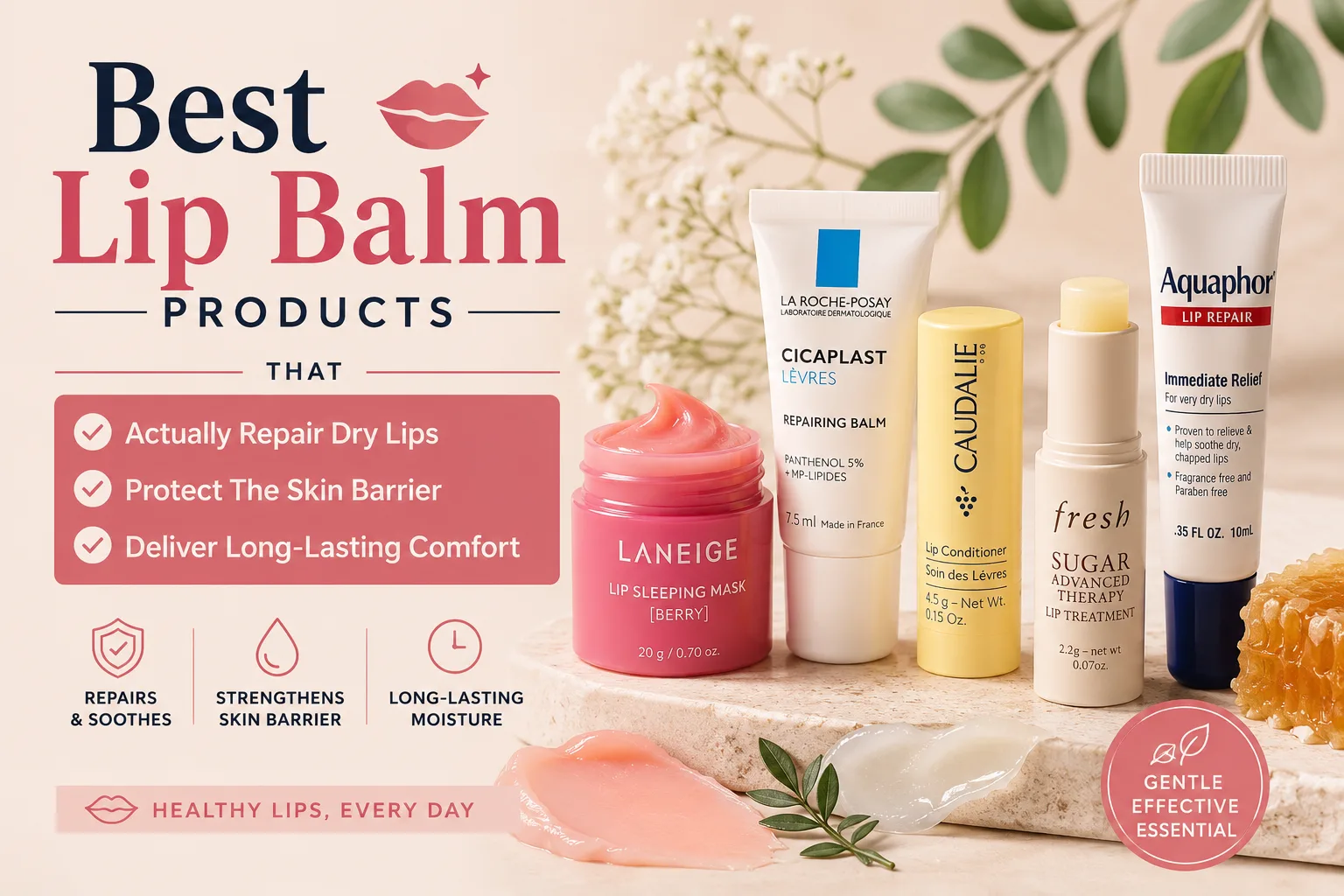
Best Lip Balm Products That Actually Repair Dry Lips, Protect The Skin Barrier, And Deliver Long-Lasting Comfort
Lips deal with constant stress from weather, dehydration, sun exposure, indoor heating, air conditioning, and irritating cosmetic ingredients. Unlike the rest of the skin, lips contain very few oil glands, which means they lose moisture faster and recover more slowly after damage. That is why choosing the best lip balm matters more than most people realize.
A good formula does far more than create a shiny layer on the surface. The strongest products reduce transepidermal water loss, support the skin barrier, calm inflammation, and protect against environmental triggers without causing dependency or irritation. Some formulas excel at overnight repair, while others work better under lipstick, during outdoor sports, or for extremely sensitive skin.
This roundup was evaluated using ingredient quality, hydration longevity, texture performance, occlusiveness, fragrance load, irritation potential, SPF protection, value, and real-world usability. Products that rely heavily on flavoring agents or temporary cooling ingredients without delivering meaningful repair ranked lower. The goal was simple: identify the best lip balm choices that genuinely improve lip health over time rather than masking dryness for an hour.
| Lip Balm | Best For | Key Ingredients | Texture | SPF |
|---|---|---|---|---|
| Aquaphor Lip Repair | Severe dryness and barrier repair | Petrolatum, shea butter, panthenol | Rich ointment | No |
| Laneige Lip Sleeping Mask | Overnight hydration | Berry extracts, murumuru butter, hyaluronic acid | Thick cream-balm | No |
| Jack Black Intense Therapy Lip Balm | Outdoor protection | Shea butter, avocado oil, vitamin E | Smooth balm | SPF 25 |
| Burt’s Bees Beeswax Lip Balm | Everyday natural feel | Beeswax, peppermint oil, lanolin | Firm stick | No |
| La Roche-Posay Cicaplast Lips | Damaged and irritated lips | Panthenol, shea butter | Protective cream | No |
| Summer Fridays Lip Butter Balm | Cosmetic shine and comfort | Shea butter, murumuru seed butter | Glossy balm | No |
| Vaseline Lip Therapy Original | Budget hydration | Petrolatum | Dense occlusive | No |
| Fresh Sugar Advanced Therapy | Aging and flaky lips | Sugar, meadowfoam oil | Creamy stick | No |
| Eucerin Acute Lip Balm | Sensitive lips and eczema-prone skin | Ceramides, panthenol | Medical-style ointment | No |
| Drunk Elephant Lippe Balm | Luxury nourishment | Peptides, mongongo oil | Silky balm | No |
Aquaphor Lip Repair: The Gold Standard For Severely Dry And Cracked Lips
Aquaphor Lip Repair consistently ranks among the best lip balm products because it focuses on recovery instead of cosmetic appeal. The formula relies heavily on petrolatum, which remains one of the most effective occlusive ingredients in dermatology. Despite modern marketing trends that often criticize petroleum-based products, dermatologists continue to recommend them because they dramatically reduce moisture loss and create the ideal environment for healing.
The texture feels richer than a traditional stick balm, yet it spreads evenly without becoming sticky or waxy. It works especially well for people dealing with cracked corners, peeling skin, or chronic dryness caused by retinoids, cold weather, or dehydration. Dermatologist Dr. Shereene Idriss once described petrolatum-based formulas as “boring but extremely effective,” and that perfectly captures Aquaphor’s appeal. It is not glamorous, but it delivers visible improvement quickly.
One drawback is shine. Some people dislike the glossy finish, especially during daytime use. It also lacks SPF protection, which means outdoor users need an additional sunscreen layer. Still, for overnight repair and emergency recovery, very few products outperform it.
Laneige Lip Sleeping Mask: Intensive Overnight Recovery With A Softening Finish
Laneige transformed overnight lip care into a mainstream category. Its Lip Sleeping Mask became popular because it combines a luxurious texture with real hydration performance. Unlike thin wax sticks that disappear quickly, this formula stays intact through the night and leaves lips noticeably softer by morning.
The blend of murumuru butter, shea butter, and moisture-binding ingredients helps repair flaky texture while maintaining flexibility in the skin barrier. The cushiony texture also prevents the tight, stretched feeling common with dry lips. Beauty editor Jessica DeFino once noted that “comfort is a measurable part of skincare performance,” and Laneige understands that principle well. The sensory experience makes consistent use more likely.
The biggest criticism involves fragrance. Sensitive users may react to the scented berry formula, particularly if their lips are already compromised. It is also more expensive than pharmacy alternatives that perform similarly in raw hydration metrics. Even so, people who value texture elegance and overnight softness often consider it among the best lip balm treatments for nighttime use.
Jack Black Intense Therapy Lip Balm: Reliable SPF Protection Without The Chalky Feel
Sun damage is one of the most overlooked causes of chronic lip dryness and premature aging. Jack Black Intense Therapy Lip Balm solves that issue with broad-spectrum SPF 25 protection while still delivering strong hydration. Many SPF lip products feel gritty, leave a white cast, or develop an unpleasant sunscreen taste. This formula avoids most of those problems.
Ingredients like avocado oil, shea butter, and green tea extract help support the lips while sunscreen filters protect against UV exposure. The texture remains smooth in both warm and cold climates, which makes it a favorite among hikers, runners, skiers, and beachgoers. It also layers well under matte lipstick because it does not pill excessively.
Flavor options can be divisive. Mint and shea butter varieties feel refreshing to some users but irritating to others. Those with highly reactive lips may prefer fragrance-free alternatives. Despite that limitation, this remains one of the best lip balm choices for people who spend time outdoors and want daily UV protection without sacrificing comfort.
Burt’s Bees Beeswax Lip Balm: A Classic Formula That Still Holds Up
Burt’s Bees became popular long before clean beauty turned into a marketing category. The original beeswax balm developed a loyal following because it offered a natural-feeling alternative to petroleum-heavy ointments while still providing solid everyday moisture retention.
Beeswax forms a breathable protective layer, while lanolin and botanical oils help soften rough patches. The peppermint oil creates a cooling sensation that many users associate with freshness. For moderate dryness and daily maintenance, the formula performs consistently well. Makeup artist Bob Scott once commented that “the best products are often the ones people finish completely,” and Burt’s Bees sticks are frequently used down to the last inch.
The formula is less ideal for severely damaged lips. Peppermint oil can sting compromised skin, and the balm lacks the deep occlusive strength found in petrolatum-based products. Still, for casual daily use and portable convenience, it remains one of the best lip balm staples available at a reasonable price.
La Roche-Posay Cicaplast Lips: Barrier Repair For Irritated And Sensitive Skin
La Roche-Posay designed Cicaplast Lips with skin recovery in mind rather than cosmetic shine. This makes it especially valuable for people experiencing irritation from eczema, over-exfoliation, prescription acne treatments, or harsh weather exposure.
The formula uses panthenol to calm inflammation while shea butter and occlusive agents help reinforce the damaged barrier. The texture initially feels dense but settles into a flexible protective layer instead of a heavy wax film. Unlike many fragranced balms, it minimizes unnecessary irritants, which improves tolerability for sensitive users.
Its understated finish may disappoint people who want gloss or a luxurious sensory experience. It also requires reapplication after eating because the protective layer gradually breaks down. Still, from a dermatological standpoint, it is among the best lip balm formulas for restoring damaged lips without triggering additional irritation.
Summer Fridays Lip Butter Balm: Cosmetic Elegance With Genuine Hydration Benefits
Summer Fridays Lip Butter Balm gained popularity through social media, but its success is not based on packaging alone. The formula balances cosmetic shine with meaningful nourishment, making it ideal for people who want their lip care to double as a beauty product.
Shea butter and murumuru seed butter provide emollient support while vegan waxes create a glossy, smooth finish that enhances lip texture visually. Unlike many trendy gloss-balms that disappear quickly, this formula maintains softness for several hours. It also layers beautifully over lip liner and lipstick without separating awkwardly.
The downside is value. Frequent users can go through a tube quickly, especially if they reapply for shine rather than hydration. Some flavored versions also contain fragrance compounds that sensitive users may not tolerate well. Even so, among fashion-forward products, it deserves recognition as one of the best lip balm options that successfully merges skincare performance with cosmetic appeal.
Vaseline Lip Therapy Original: The Budget-Friendly Formula Dermatologists Still Recommend
Vaseline Lip Therapy proves that effective lip care does not need expensive peptides or exotic oils. Petrolatum remains one of the most evidence-supported ingredients for preventing moisture loss, and this formula uses it effectively.
The dense texture creates a durable seal over the lips, which makes it especially helpful during winter or while sleeping. Many dermatologists recommend simple occlusive formulas because they reduce exposure to unnecessary allergens. “Simpler is often safer,” according to dermatologist Dr. Ranella Hirsch, particularly for patients with recurring lip irritation.
Some consumers dislike the thick feel or glossy appearance, and the jar packaging can feel less hygienic than squeeze tubes. It also offers little in the way of active nourishment beyond moisture retention. Yet for raw protective performance at a low cost, it remains one of the best lip balm products available worldwide.
Fresh Sugar Advanced Therapy: Softening Mature And Chronically Flaky Lips
Fresh Sugar Advanced Therapy stands out because it targets texture improvement as much as hydration. The formula contains sugar-derived humectants, meadowfoam seed oil, and nourishing plant oils that help soften persistent flakes and fine lines around the lips.
The creamy stick texture glides easily without dragging, which makes it useful for mature lips that have become thinner or more textured with age. Unlike some heavy balms, it feels refined and lightweight while still maintaining decent staying power. The finish also pairs well with satin and cream lipsticks.
The main limitation is durability in extreme climates. Users exposed to dry winter air or strong wind may find themselves reapplying frequently. The price is also relatively high compared to simpler formulations. Still, for elegant daily wear and visible smoothness, it earns its place among the best lip balm choices for aging lips.
Eucerin Acute Lip Balm: Clinical-Level Relief For Extremely Sensitive Lips
Eucerin Acute Lip Balm is built for people who react badly to common lip care ingredients. Many flavored or scented balms worsen irritation because the lips absorb sensitizing compounds quickly. This formula strips away unnecessary extras and focuses entirely on recovery.
Ceramides, panthenol, and soothing emollients help rebuild the skin barrier while minimizing inflammation. The texture feels medicinal rather than luxurious, but the performance speaks for itself. It is particularly effective for eczema-prone users, people undergoing medical treatments that dry the lips, or anyone recovering from allergic reactions.
Its plain finish and clinical branding may make it less appealing from a cosmetic perspective. It also lacks the immediate silky slip found in beauty-oriented formulas. Yet for vulnerable skin, it remains one of the best lip balm products available because it prioritizes healing over aesthetics.
Drunk Elephant Lippe Balm: Luxury Nourishment With Skin-Care-Focused Ingredients
Drunk Elephant Lippe Balm approaches lip care the same way premium facial skincare approaches anti-aging. Instead of relying solely on waxes and occlusives, it incorporates peptides, antioxidant-rich oils, and fatty acids designed to improve softness and elasticity over time.
The silky texture absorbs more cleanly than heavy ointments, which appeals to users who dislike greasy finishes. Mongongo oil and marula oil help support flexibility in dry lips, while peptide technology aims to improve smoothness. The formula feels especially comfortable under makeup and during daytime wear.
The challenge is cost. Users paying luxury skincare prices may expect dramatic repair results that no lip balm can realistically deliver. Extremely dry lips may also need a stronger occlusive product layered on top. Even so, for people seeking a refined, skincare-oriented formula, this ranks among the best lip balm products in the premium category.
How To Choose The Right Lip Balm Based On Your Specific Needs
Not all dry lips are caused by the same problem. Some people lose moisture because of climate exposure, while others experience irritation from allergens, excessive licking, or irritating cosmetic products. Understanding the cause changes which formula works best.
Petrolatum-heavy products tend to perform best for severe cracking because they dramatically slow moisture loss. Balms with ceramides and panthenol help repair the barrier after irritation. SPF formulas matter for outdoor exposure and long-term prevention of sun damage. Glossy cosmetic balms work well for daytime comfort but may not provide enough overnight repair for deeply dehydrated lips.
Ingredient awareness also matters. Fragrance, menthol, eucalyptus, camphor, cinnamon, and strong flavor oils can trigger irritation in sensitive users. Many people repeatedly apply flavored balms believing they are hydrating when they are actually maintaining a cycle of inflammation and temporary relief.
The best lip balm for one person may perform poorly for another because environment, skin sensitivity, and usage habits all affect results. The strongest formulas match the user’s actual condition instead of chasing trends or packaging aesthetics.
What Makes A Lip Balm Truly Effective
Hydration alone is not enough. Effective lip care combines humectants, emollients, and occlusives in a balanced way. Humectants attract water, emollients soften rough texture, and occlusives seal everything in place. Products missing one of those elements often feel good briefly but fail to create lasting improvement.
Texture stability also matters. A balm that melts instantly or disappears after twenty minutes forces constant reapplication. Long-term comfort comes from consistent barrier support, not temporary slickness. Dermatologists often emphasize that the feeling of hydration and the retention of hydration are not always the same thing.
Another overlooked factor is behavioral compatibility. The best lip balm is one that people actually use regularly. If a product tastes unpleasant, feels sticky, or interferes with makeup, consistency drops. Formulas that balance performance with enjoyable texture tend to produce better real-world results.
Final Thoughts On Finding The Best Lip Balm
The lip care market is crowded with products that promise instant softness while relying heavily on fragrance, flavoring, and temporary shine. The products that genuinely improve lip condition focus instead on barrier repair, moisture retention, and ingredient stability.
Aquaphor and Vaseline dominate pure repair performance. Laneige excels in overnight comfort. Jack Black leads in SPF protection. La Roche-Posay and Eucerin work exceptionally well for sensitive skin. Summer Fridays and Fresh bring cosmetic elegance without abandoning hydration completely.
Finding the best lip balm comes down to identifying what your lips actually need: protection, recovery, softness, SPF defense, or irritation control. Once that match is made correctly, healthy lips become far easier to maintain year-round.
Frequently Asked Questions About Lip Balm
How often should lip balm be applied during the day?
Most people benefit from applying lip balm three to five times daily, though climate and individual dryness levels can increase that need. Reapplication after eating, sun exposure, or long periods outdoors helps maintain protection. The best lip balm formulas last longer because they reduce moisture loss more effectively.
Can lip balm make lips dependent on it?
Lip balm itself does not create physical dependency, but irritating ingredients can create a cycle of dryness and repeated application. Products containing menthol, camphor, strong fragrance, or flavor oils sometimes worsen irritation over time. Barrier-focused formulas without irritants generally improve lip health rather than encouraging overuse.
Which ingredients should be avoided in lip balm for sensitive lips?
Sensitive lips often react poorly to peppermint oil, cinnamon, menthol, eucalyptus, artificial fragrance, and excessive exfoliating acids. Dermatologists typically recommend simpler formulas with petrolatum, ceramides, shea butter, or panthenol for compromised skin.
Is SPF lip balm necessary every day?
Daily SPF protection helps prevent sunburn, collagen breakdown, pigmentation changes, and chronic dryness. Lips receive direct UV exposure and have very little natural protection. Using the best lip balm with SPF is especially important for outdoor exercise, beach exposure, skiing, and high-altitude environments.
What is the difference between lip balm and lip mask?
Lip balm is usually designed for daytime maintenance and frequent application, while lip masks are thicker overnight treatments intended to provide extended repair. Overnight masks often contain richer occlusive ingredients and remain on the lips for several hours without interruption.
Why do some lip balms feel hydrating at first but dry out lips later?
Many formulas rely on temporary sensory effects like cooling agents or glossy oils that evaporate quickly. Without enough occlusive support, moisture escapes rapidly after the initial layer fades. The best lip balm products maintain hydration by reinforcing the skin barrier rather than providing short-term slickness alone.
Mariam Nazir
Mariam Nazir founded Top 10 with a straightforward goal: create a website where people can find genuinely helpful, well-researched top 10 lists on the topics they actually care about.